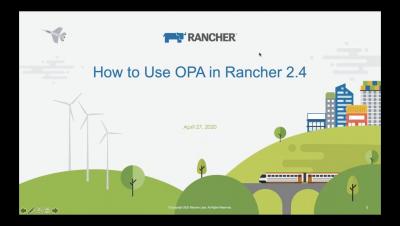
Kubernetes Master Class - OPA in Rancher 2.4 - 2020-04-27
This is the Kubernetes Master Class from April 27, 2020, where we discussed how to use the Open Policy Agent features present in Rancher 2.4.


The latest News and Information on DevOps, CI/CD, Automation and related technologies.
Cloud-native is the new standard for modern applications. This usually means container-based applications, using the popular Docker and Kubernetes platforms, and increasingly also service mesh platforms such as Istio and Envoy. With that, container security in general—and Kubernetes security in particular—is at the forefront of engineers’ minds. Docker popularized containers based on the good-old but little-used LXC Linux containers.
Service alarms are going off and you are on the hook to restore stability, but you need to prevent any more changes to production while you dig further. You could "freeze" production by announcing it in the office, sending a message on Slack, or sending an email to the affected teams, but that may not be enough or may require extra work that would distract you from debugging and fixing the problem.
Modern-day life is fast, hectic, demanding. Time is precious, and we often need to be able to squeeze every atom of efficiency from our environment and our tools. But sometimes, the best thing you can do for your productivity is – to do nothing. Sometimes, less is more. In this article, we want to show you a number of nice, fun and not-strictly-productivity-focused apps that can help you relax, forget about the time-efficiency continuum, and recharge your cells for the next lap in the race.
This is the second blog in our series releasing the WSLConf recordings. Earlier this year, Canonical had the pleasure of hosting WSLConf, a virtual conference dedicated to the Windows Subsystem for Linux (WSL). The conference highlighted ideas and projects from presenters from around the globe with attendees from at least eight different time zones.
One of the challenges when you’re starting out with DevOps is getting the lay of the land. There are a lot of tools out there. And when one of the goals of DevOps is continually improving your processes, it’s important for you to understand how those tools might fit in your infrastructure. At the same time, you want to be efficient. You don’t want to add tools that overlap with one another. Or tools that cost more than other effective alternatives.
Digital transformation and IT modernisation initiatives provide innovations to create a competitive edge and drive business growth. But they’ve also created increasingly complex environments that need to be managed by teams that are strapped for time and resources.
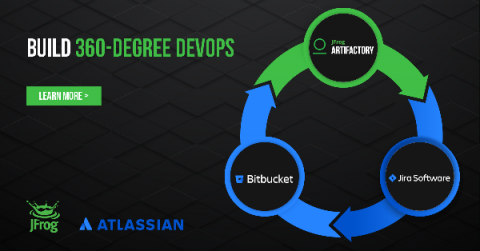
In agile development, planning, coding, and builds are an ongoing loop. But when a circle is broken, you can’t travel it at full speed. For users of Atlassian Bitbucket Server and Jira, JFrog’s integrations can help Artifactory bridge the gaps for continuous velocity. In a previous blog post, we discussed how to provide Jira information as a critical “why” in your build information.
If you’re in enterprise IT, you’ve probably already looked into Microsoft’s Azure public cloud. Microsoft Azure offers excellent enterprise-grade features and tightly integrates with Office 365 and Active Directory. It also provides a managed Kubernetes service, AKS, that you can provision from the Azure portal.