Operations | Monitoring | ITSM | DevOps | Cloud

What the Cyber Resilience Act (CRA) means for IoT manufacturers

The EU Cyber Resilience Act is coming. I’ve talked about this piece of upcoming regulation in some depth before, having covered its background and stipulations in previous pieces on our website and for the Forbes Technology Council, and explored what it means for the businesses who consume open source in later articles (you can also read a version of this blog on Forbes).

Real-Time Visualization for IIoT Data

With the increased adoption of the Industrial Internet of Things (IIoT), connected devices and sensors generate vast amounts of data, and you’ll need an effective way to capture, store, and visualize all of it. With effective data visualization and analysis, you can transform raw data into actionable insights and make informed decisions. This post will break down tools like Grafana, Node-RED, and time series databases, including their benefits to your IIoT workload.

How New IoT Security Regulations Will Shape the Industry's Future

New IoT security regulations are imminent, with businesses across the US, UK, and EU bracing for the impacts of the Cyber Resilience Act (CRA), Product Security Telecommunications Infrastructure, and Cyber Trust Mark. These are not just administrative changes; they represent a pivotal shift in how IoT devices will be developed, deployed, and managed. Ensuring security, privacy, and compliance is business-critical.

An Introductory Guide to Cloud Security for IIoT

The state of industries has come a long way since the Industrial Revolution with new technologies such as smart devices, the internet, and the cloud. The Industrial Internet of Things (IIoT) is a network of industrial components that share and process data to gain insights. But as IIoT involves sensitive data and life-critical operations, this also comes with various IIoT cloud security challenges. Therefore, it is important to strengthen security.

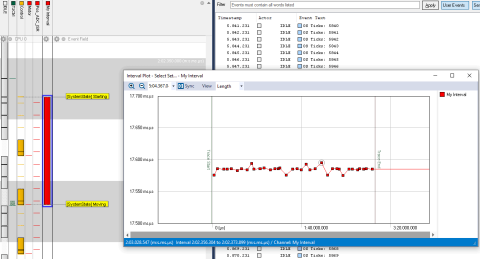
How Memory Usage Patterns Can Derail Real-time Performance

In this article, we will learn how memory usage patterns can affect the real-time performance of an embedded application, drawing from a recent experience tracing an audio DSP application running on an embedded Linux platform. First, I will introduce the product in question and the real-time audio software I developed for it. Then, I’ll describe the issues I encountered with audio callbacks and the strategy I followed to determine the cause of the issues, ending with my solution and lessons learned.

The Impact of IIoT and Real-Time Analytics on Renewable Energy

Technology focused on building a more sustainable future continues to advance at incredible speed. The Industrial Internet of Things (IIoT) and real-time analytics are opening up new horizons for renewable energy. This post looks at the intersections of innovation and ecology, where small chips and sensors play major roles in the renewable energy sector.

Anomaly Detection for IoT: A Basic Primer

In the world of IoT, ensuring the reliability, efficiency, and security of connected devices is critical. As IoT devices generate massive amounts of data, detecting anomalies becomes increasingly important. Anomaly detection helps identify potential issues before they escalate, providing businesses with valuable insights and the ability to improve operational efficiency if used correctly. In this article, you will learn about some potential use cases for anomaly detection across different industries.

Diving into JTAG - Security (Part 6)

The JTAG interface is an important tool for debugging and testing embedded systems, providing low-level access to the internal workings of microcontrollers and other integrated circuits. However, this powerful interface also presents significant security threats. In the sixth and final part of this Diving into JTAG article series, we will focus on security issues related to JTAG and the Debug Port.