
A core belief of Memfault is that we can ship faster when we have good infrastructure in place. An essential piece of this infrastructure is tools to send firmware updates over the air. It enables the team to ship more often and spend more time building features. In this article, we look specifically at what is required to ship over-the-air firmware updates for Linux systems. A good OTA setup should allow you to quickly prepare updates and ship them with confidence.
A look at the main things you need to consider when planning your IoT project with links to tutorials and source code. There’s a lot of stuff written about the Internet of Things (IoT) at a conceptual level that doesn’t really cover anything concrete. If you’ve ever wanted to get started on a real IoT project but didn’t know where to start, you are in the right place.
This article was originally published in The New Stack and is reposted here with permission. Selecting the tools that best fit your IoT data and workloads at the outset will make your job easier and faster in the long run. Today, Internet of Things (IoT) data or sensor data is all around us. Industry analysts project the number of connected devices worldwide to be a total of 30.9 billion units by 2025, up from 12.7 billion units in 2021.
Separate “debug” and “release” builds are very common in embedded development. Typically the notion is improved debug capabilities (less aggressive compiler optimizations, more debugging information like logs) vs. highly optimized and hardened production release builds. I’m here to describe disadvantages to this practice, and why it might make sense to consolidate to a single build! Like Interrupt? Subscribe to get our latest posts straight to your mailbox.
Internet-of-Things (IoT) devices and technologies have penetrated into our life. Nowadays, we can easily find IoT devices around us. Home appliance manufacturers produce IoT products for smart homes. Car makers invest in smart vehicles that can communicate with other smart cars and IoT objects nearby. Governments allocate huge resources to build smart cities with IoT technologies to improve the quality of life for people and promote economic growth.
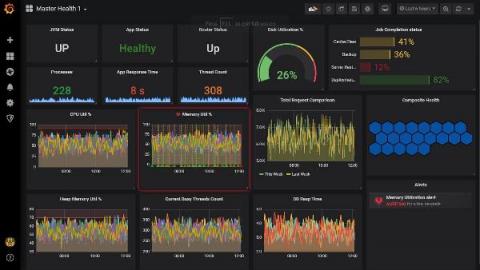
IoT devices open the door to all sorts of computing potential, but they can also produce a flood of telemetry data that users need to properly collect and monitor to ensure those devices are working properly. It’s no wonder so many individuals and businesses use Grafana for IoT use cases, whether they’re starting an aquaponic farm in South Africa, managing an industrial-scale electroplating factory in Ohio, or simply keeping tabs on Pretzel the python at its home in the UK.
Many industrial operators find themselves amid yet another industrial revolution. Deeper insight through artificial intelligence (AI) and machine learning (ML) integrations characterize this fourth wave (or Industry 4.0). Data is no longer just a record occupying server space. It’s alive and providing value. Real-time insights work in tandem with historical records, painting a complete picture of the lifespan of a piece of machinery and/or its components.