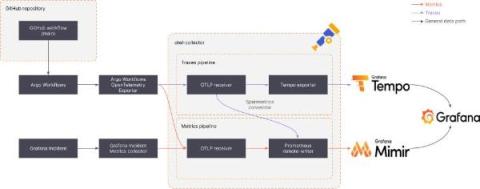
Cribl.Cloud has grown substantially since its launch, and our observability practice has developed in parallel. Gone are the early days of manageable logs and metrics. As we continue to grow, that problem will become even more challenging. We used Splunk internally, a well-used internal system, as our primary event management system. With Cribl Edge nodes deployed across our entire cloud fleet, we collect logs and metrics and send them to Cribl Stream for processing and routing.
As businesses transition to the cloud, the need for strategic implementation of Cloud Network Monitoring has become essential. This is because IT managers and CIOs across organizations are looking for robust real-time monitoring, performance optimization, and security vigilance for their distributed network. If you’re also thinking of cloud networking monitoring and want to know more about it in detail, continue reading this article further.
Containerization has become a cornerstone of modern software development and deployment. Docker, a leading containerization platform, has revolutionized the way applications are built, shipped, and deployed. As a DevOps engineer, mastering Docker and understanding best practices for Dockerfile creation is essential for efficient and scalable containerized workflows. Let’s delve into some crucial best practices to optimize your Dockerfiles.
Cloudwatch is a standard component for any AWS user, with tight integrations into every AWS service. While Cloudwatch initially seems like a cost-effective solution, its lack of functionality and flexibility can result in higher costs. Let’s explore Coralogix vs Cloudwatch.
With the vast amount of data that is transmitted through the internet, it is essential to have a reliable connection. However, sometimes even the most stable connection can experience issues, one of which is the "DNS Server Not Responding" error. This error occurs when your device is unable to establish a connection with the DNS server, thereby depriving you of access to the internet.
As you probably know, Oh Dear is run by a small but capable team. One of the advantages of being small is that we can implement stuff pretty quickly: there’s no red tape, and our code base is very healthy. So, when our users have feature requests that make sense to add to Oh Dear, we can move fast. In the past month, we implemented two smallish feature requests for our DNS check we got through support. Here’s what our new DNS settings screens look like.