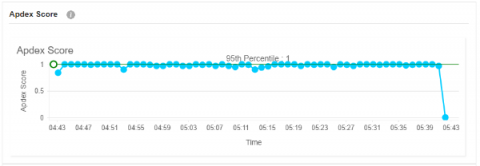
Many software developers utilize Node.js to create high-performance backend web applications. It has numerous advantages, including ease of application deployment, asynchronous request handling, great performance, and more. Integrating a solid monitoring solution into your Node.js application is critical since it gives you visibility into what's going on in your application at any given time or over a specific time.
Once you have decided to migrate your MySQL database to AWS, choosing the services you need from the lot of options available in AWS can be quite overwhelming. Migrating will inevitably raise the question.
Over the past year, Grafana Labs has grown from 300 to 700 Grafanistas. Moving forward, we expect to continue to maintain a high rate of change, and to sustain that, we need to ensure there is flexibility in how our teams* are set up. The majority of our Engineering squads have changed in size and structure — and the same goes for the Grafana Observability team, where I work.
We’re thrilled to announce several new observability features for the Pub/Sub to Splunk Dataflow template to help operators keep a tab on their streaming pipeline performance. Splunk Enterprise and Splunk Cloud customers use the Splunk Dataflow template to reliably export Google Cloud logs for in-depth analytics for security, IT or business use cases.
Linux Active Directory (AD) integration is historically one of the most requested functionalities by our corporate users, and with Ubuntu Desktop 22.04, we introduced ADsys, our new Active Directory client. This blog post is part 2 of a series where we will explore the new functionalities in more detail.
For much of the past two years, businesses have been looking ahead to an eventual return to the office – a return that has been frequently delayed and disrupted by the unpredictable nature of the COVID-19 pandemic. But with some employees resistant to returning, companies are looking for new options to entice employees back. It may not be a return to the office at all, but instead a movement towards an entirely new way of working together.
What happens when the tools and services you depend on to drive Site Reliability Engineering turn out to be susceptible to reliability failures of their own? That’s the question that teams at about 400 businesses have presumably had to ask themselves this month in the wake of a major outage in Atlassian Cloud.
At this point we are well past the third installment of the trilogy, and at the end of the second installment of trilogies. You might be wondering if the second set of trilogies was strictly necessary (we’re looking at you, Star Wars) or a great idea (well done, Lord of the Rings, nice compliment to the books). Needless to say, detecting anomalies in data remains as important to our customers as it was back at the start of 2018 when the first installment of this series was released.