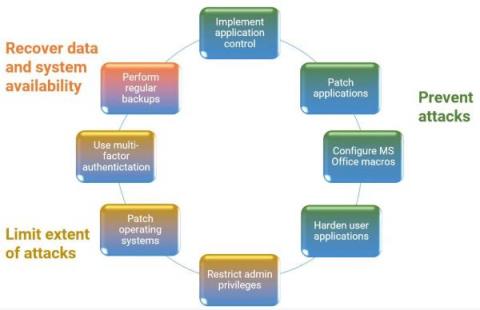
What is the Essential Eight Maturity Model - and where does your data fit into the picture?
Join any conversation about cybersecurity in Australia and the Essential Eight Maturity Model may well be mentioned.


Beep, beep, beeeeeeeep. Read path SLO page, again. And I’ve almost found the noisy neighbor! That was me. And will probably be me again at some point in the future. As we continue to scale up the team that builds and runs Grafana Loki at Grafana Labs, I’ve decided to record how I find and diagnose problems in Loki.
Do you possess valuable insights from your experience leading teams and running operations? You can use these to inspire and motivate leaders - with less experience - as they embark on growing their businesses. A business advisor can play a pivotal role in positively impacting the trajectory of a business by using their experience to provide informed opinions and offer advice.
My mantra with regards to automation has always been, “If you do it more than twice, automate it.” And I stick by that, with a few exceptions. There are some things you should never trust to an automated script.
Security is a vital part of application development, yet it may be neglected until an attacker takes advantage of a vulnerability in the system. The consequences of a security breach can damage an application’s integrity as well as a company’s reputation and revenue. Software architects and engineers need to pay special attention to securing the systems they work on.
As the IT world continues to grow in size and complexity, an increasing amount of information is needed for both the operation and security of IT devices. It’s nearly impossible for MSPs and IT professionals to remember everything without writing it down somewhere, but “somewhere” needs to be both secure and readily available to reference. Fortunately, IT documentation software was created to be both.
Inventory is important for all organizations as somehow it is an integral part of your business. However, the organization does not give priority to inventory management as a result business suffers from loss due to negligence of inventory management. Therefore, in this blog, we will cover types of inventory management and other topics that will help you in better inventory management. But first, let us know what exactly the inventory and inventory management is!
With more than 1.5M room nights booked per day, Booking.com requires a solid infrastructure that’s constantly monitored. And indeed, Booking.com now has a footprint of 50,000+ physical servers running across four data centers and six additional points of presence. The sheer size of this server fleet makes it viable for Booking.com to have dedicated teams specializing into looking only at the reliability of those servers.