Operations | Monitoring | ITSM | DevOps | Cloud

Comfort and empathy at home: why Promed Equipment Oakville is the first choice for renting hospital beds

From recuperating after surgery to managing chronic illnesses and providing long-term care at home. A hospital bed is one of the most important pieces of equipment for this journey. A hospital beds for sale, unlike a conventional one, offers safety, comfort and practical measures that cater to the needs of both patients while at rest or in transit and caregivers. Promed Equipment Oakville has thus become not only a primary means but also an integral component to home health care services in and around the city of Oakville.

Sell or Shred? A Practical Guide to Hard Drive Disposal Risks and Returns

Hard drive disposal is rarely black and white. The right move depends on security, financial value, and environmental consequences. Selling a used drive might generate revenue, but at what cost if data isn't fully erased? Destroying hardware provides finality but removes the resale option. This guide breaks down how to assess disposal options with clarity. It dives into data classification, resale timing, environmental responsibility, and wiping procedures. Each section helps you weigh real risks against potential gains. Making the right choice means protecting sensitive data while staying compliant, efficient, and forward-thinking.

Advancing Green Energy in North Carolina: The Role of Solar Panel Recycling

From Charlotte to Wilmington, North Carolina is rallying behind a vision for a sustainable tomorrow, using cutting-edge tech and good old-fashioned American ingenuity to drive progress. The way energy is generated and consumed in the state has undergone a significant overhaul, with solar energy joining the fray and creating a more dynamic energy landscape. As North Carolina strives to tap the sun's energy, a fresh hurdle emerges: Solar panels don't last forever, and we take care of them from birth to cremation - the whole lifespan, that is. In the dash toward a cleaner, greener future, one clear obstacle stands in our way.
Sponsored Post

How to Choose the Right Incident Management Tool for Your Team

IT disruptions are inevitable. What separates a resilient organization from the rest is its ability to respond quickly, efficiently, and collaboratively to incidents. The cornerstone of such responsiveness? The right incident management tool. But with a market flooded with tools, each promising to revolutionize your workflows, how do you pick the one that truly fits your team's needs? In this blog, we'll break down the key factors to consider when selecting an incident management tool, ensuring you make an informed decision that enhances your team's effectiveness and reliability.

Introducing 400G Ports

Discover why 400G is growing in popularity across industries, and how you can deploy it with Megaport. The Megaport team is excited to introduce 400G ports. This addition to our network offering gives enterprises, cloud builders, and service providers access to ultra-high bandwidth on demand, making it easier than ever to interconnect clouds, data centers, and services at massive scale. If your IT team is already using 100G bandwidth, the need for 400G might creep up more quickly than you think.

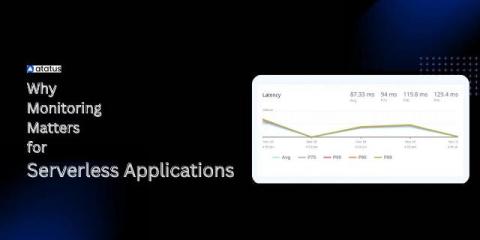
Serverless Applications: Why Monitoring is Essential for Speed and Reliability

Serverless applications are becoming the go-to architecture for modern developers. Startups and enterprises are building serverless applications because they offer scalability, cost-efficiency, and flexibility. However, these advantages come with unique challenges, especially when it comes to monitoring serverless applications. Traditional server monitoring tools fail to capture short-lived functions, making serverless application monitoring essential for maintaining performance and reliability.

A Practical Guide to Python Application Performance Monitoring (APM)

When your Python app starts slowing down, maybe queries are taking longer, memory keeps creeping up, or API calls are lagging—basic server metrics won’t tell you why. You need to see what’s happening inside the application itself. That’s the role of Application Performance Monitoring (APM). It gives you a breakdown of database queries, external API calls, memory usage, error rates, and more, so you can connect the dots between code and performance.