If you’re finding it a little difficult to sift through all the varying, often conflicting information surrounding the topic of network observability, you’re certainly not alone.
Event correlation is a powerful capability that can help reduce IT noise, detect incidents in real-time, and improve the performance of critical applications and services. Read on for a deep dive into event correlation as we explore everything from its origins to its current state-of-the-art techniques. We’ll also discuss how event correlation fits into the bigger picture of integrated service management.
The Harvester team is pleased to announce the next release of our open source hyperconverged infrastructure product. For those unfamiliar with how Harvester works, I invite you to check out this blog from our 1.0 launch that explains it further. This next version of Harvester adds several new and important features to help our users get more value out of Harvester. It reflects the efforts of many people, both at SUSE and in the open source community, who have contributed to the product thus far.
For the last couple of years, most of us have been working from home. Pandemic has changed the world of networking and events. Events went virtual because of lockdowns. Now they’re becoming in-person again. These events are a great way to drive new business. Exhibiting at shows can be expensive, but you can achieve a lot as an attendee. You’ve probably spent quite some time building your digital presence in the last couple of years.
HAProxy is generally the frontend layer of your application, which means it plays a critical role since all traffic first lands on this layer. Because of this, you need to make sure everything is working at this layer all the time, as any issue can directly impact your business. Therefore, having visibility on this layer is crucial. Visibility can come from two aspects: the metrics HAProxy emits and the logs it generates while handling requests.
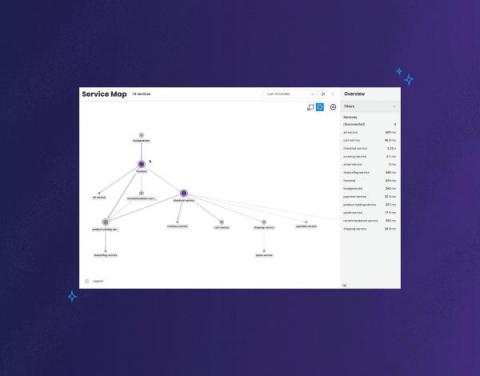
Today, we're announcing the launch of Honeycomb Service Map. This isn't your grandparent's version of a service map. This feature reimagines what it is that you want to know or investigate when looking at visualizations of how your services communicate with one another.
Shopping—as we once knew it—has changed forever. And with it, the art and science of providing the right product at the right place and time has become even more complicated for retailers everywhere. In an ever-competitive retail landscape, customers—often impatient with chronic out-of-stocks and other supply chain disruptions—now expect shopping experiences that are more unified, personalized, and address their immediate needs.
You might think that colocation has been replaced by the cloud. But that’s only true in marketing terms. The reality is that colocation and the role it plays in modern edge computing has never been more important or more required. Believe it or not, cloud computing doesn’t happen in the actual sky – it happens in a data centre. And knowing where that data centre is, and how fast it links to your network and the internet, can be challenging with hyperscalers.