Operations | Monitoring | ITSM | DevOps | Cloud

How to Improve First Contentful Paint

Chances are, you've run a PageSpeed Insights test and noticed "First Contentful Paint" as one of the first numbers in the report. I've covered most of the metrics before in my article on Understanding the Page Speed Metrics in Google Lighthouse, but in this article I wanted to dive deeply into First Contentful Paint - particularly what it is, what a good score is, and how to improve. Table of Contents.

Monitor these Metrics to Keep your Servers Controlled

If we look at server definition, it is a piece of computer software or hardware that provides functionality to other devices or programs called clients. System administrators often come up with a common question over the performance of a server – Why is my server down? If server monitoring and management are inefficient, it often makes it very difficult to correctly analyze complex and unpredictable information in a data center. It’s hard to find a reason for server outage.

OpenTelemetry Trace 1.0 is now available

For decades, application development and operations teams have struggled with the best way to generate, collect, and analyze telemetry data from systems and apps. In 2010, we discussed our approach to telemetry and tracing in the Dapper papers, which eventually spawned the open-source OpenCensus project, which merged with OpenTracing to become OpenTelemetry.

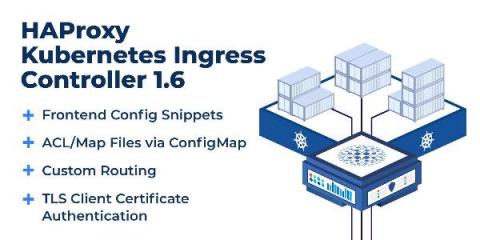
Announcing HAProxy Kubernetes Ingress Controller 1.6

We’re proud to announce the release version 1.6 of the HAProxy Kubernetes Ingress Controller. This version provides the ability to add raw configuration snippets to HAProxy frontends, allows for ACL/Map files to be managed through a ConfigMap, and enables complex routing decisions to be made based on anything found within the request headers or metadata.

LogicMonitor's Certified Ansible Content Collection Allows You To Do More With Less

Here at LogicMonitor, we’re really big on extensibility and automation. We’re constantly adding to our catalog of monitoring coverage, and we spend a lot of our time ensuring that setup is as simple as possible. We also monitor almost any data you can expose on a network. People have done way more with LogicMonitor than we would have ever imagined, and I’m extremely excited to announce our next step in that commitment to extensibility and automation.

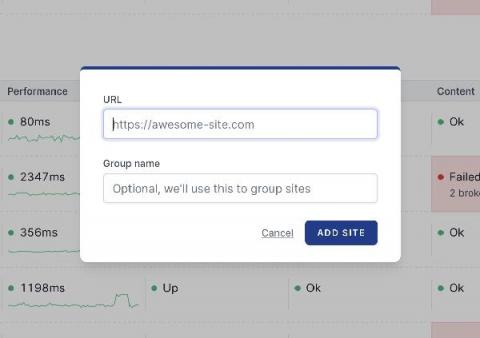
Sites can now be grouped

Our users sometimes have a large number of applications that are being monitored by Oh Dear. Some of these applications are related to each other. Think for instance of a marketing site and an API that are part of the same application. To better emphasise that some of the things that are monitored are related, you can now use groups. When you start monitoring a site at Oh Dear, you can now optionally specify a group name.

Introducing advanced user management for large teams

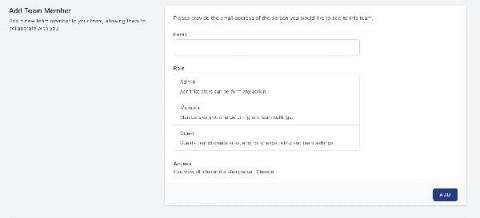
If we look at the number of sites that our users monitor, we can split our user base into two large groups. Teams in the first group only monitor one or a couple of sites. The second group monitors 30 or more sites. We've just launched new features that make user management more flexible for large teams. In this blog post, we'd like to tell you all about it.

Shared Services Teams For Great Customer Experiences

Have you ever considered integrating shared services teams into your organization’s existing operation? If you are committed to driving efficiency across your organization, there has never been a better time to explore the utilization of shared services teams for improved customer experiences. In this guide, we will break down the potential benefits of shared services teams. There is an undeniable link between customer satisfaction and organizational structure.

CostOps: The Overlooked Developer Responsibility

Developers are the kingmakers. Millions of decisions made by tens of thousands of developers are ultimately responsible for the triumph or tragedy of IT. Developers for commercial vendors, open-source projects, cloud and software as a service (SaaS) solutions, managed service providers (MSPs), and internal teams make most technology decisions far upstream from IT pros. This essentially defines ops’ role as the crew who finds a way to make washing machines fly in formation.