Operations | Monitoring | ITSM | DevOps | Cloud

A look back at 2020

2020 was, needless to say, not the best. Looking on the brighter side, in December, FireHydrant turned 2, and in spite of it all, we grew quite a bit. We raised our $8M Series A in May, our team grew nearly 4x in size, added some amazing features such as making FireHydrant Runbooks even more powerful with conditions, and great integrations, which you can find here. But even better, we got to work with all of you!
Embracing Open Source data collection

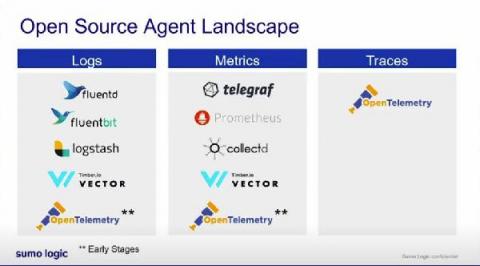
Open source has come a long way. One of my favorite reports on the subject is Red Hat’s State of Enterprise Open Source. For 2020, 95% of respondents said that open source is strategically important to their business needs. Here, I will be recapping my recent Illuminate presentation about embracing open source data collection and I thought it’s important to first talk about how open source has changed.

2020 Magecart Timeline

In this blog, we break down the timeline of the number one hacker threat to ecommerce sites today – Magecart. The 2020 Magecart timeline includes all the significant Magecart attacks in 2020. With 4,800 formjacking attacks each month alone, this timeline only represents a small proportion of attacks reported in the public domain in 2020.

A Practical Guide to Logstash: Syslog Deep Dive

Syslog is a popular standard for centralizing and formatting log data generated by network devices. It provides a standardized way of generating and collecting log information, such as program errors, notices, warnings, status messages, and so on. Almost all Unix-like operating systems, such as those based on Linux or BSD kernels, use a Syslog daemon that is responsible for collecting log information and storing it.

Integrating Grafana and CloudSQL

In this article, we are going to see how we can integrate Google Cloud with Grafana. We will integrate Google Cloud SQL with Grafana and plot the metrics on Grafana. We will also look at how we can use Google Stackdriver as the data source in Grafana to expose the metrics of Google Cloud VM’s and platforms. To use Grafana immediately, we will be using Hosted Grafana by MetricFire.

Graphite vs. InfluxDB

Both Graphite and InfluxDB are time-series monitoring data platforms, both of which have high levels of adoption throughout many industries. Both of them are suitable for enterprise use, are scalable, and are stable. That being said, there are some benefits and drawbacks to each. While InfluxDB has many benefits, many developers still prefer Graphite due to its large community, stability, and reliability.

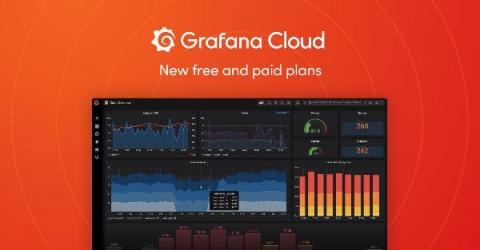
The new Grafana Cloud: the only composable observability stack for metrics, logs, and traces, now with free and paid plans to suit every use case

Oftentimes users of open source are told to go download it and figure it out… or pay for a managed solution in the cloud. So the typical choice is free and do-it-yourself or expensive and easy. With our new changes to Grafana Cloud, we are making it both free and easy to have a real, composable observability solution.

2020 in Review: LogicMonitor Product Advancements

2020 is finally over and all of us are hopeful of a return to a sense of normalcy in 2021. At LogicMonitor, we came back re-energized from a healthy year-end break and are putting the finishing touches on our product roadmap for this year. This is a great opportunity to look back on what we accomplished in 2020 despite all of the challenges we faced.