How to configure HTTPS for Ruby on Rails (RoR)
RoR (Ruby on Rails) is a server-side web application framework. To make it more secure, use HTTPS instead of HTTP.


RoR (Ruby on Rails) is a server-side web application framework. To make it more secure, use HTTPS instead of HTTP.
As explained in the last post we've spent a few weeks working on small fixes and improvements, focusing on jobs that aren't urgent but shouldn't be overlooked. Here we'll look at how a few simple code changes greatly increased efficiency when serving pages on the Downtime Monkey website. These improvements focus on reducing the server's CPU load and memory use.
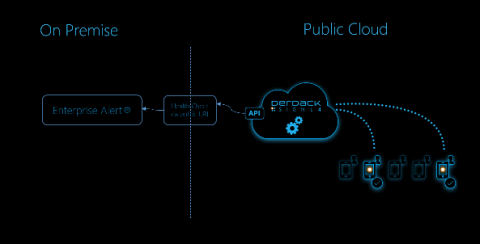
Enterprise Alert is the leading enterprise-class software in automated communication and incident response providing push notifications, SMS text messages, voice calls and emails to deliver instant notifications. With two-way smart connectors, built-in duty scheduling, customizable escalation workflows, and remote actions there is not a worry that critical events are not received and are handled in a timely manner.
You know what they say: successful deploys are all alike; every unsuccessful deploy is unsuccessful in its own way (ok, no one actually says that, except engineers who have read way too much Russian literature, ahem).
At the end of 2019, we released a new Suricata input plugin with Telegraf 1.13.0. In this blog, I’ll talk about the the powerful combination of these two open source products — the importance of Suricata and why you should use Telegraf to monitor its performance. I wanted to start off first thanking Sascha Steinbiss for submitting this plugin. Here at InfluxData, we can’t tell you how much we value our open source community.
How would you like to be in touch with what’s happening at your doorstep at all times — whether it’s a package delivery, or your loved ones arriving home — no matter where you are? Now think about the folks at Arlo, a leading home automation company, who deliver on this promise for 3.4 million homes in over 100 countries. We hear from Suma about how she uses Arlo to get notified as soon as her kids arrive home from school.
AWS Lambda is a compute service that enables you to build serverless applications without the need to provision or maintain infrastructure resources (e.g., server capacity, network, security patches). AWS Lambda is event driven, meaning it triggers in response to events from other services, such as API calls from Amazon API Gateway or changes to a DynamoDB table.
In Part 1 of this series, we discussed AWS Lambda functions and some key metrics for monitoring them. In this post, we’ll look at using Amazon’s native tooling to query those metrics. We’ll also show you how to collect logs and traces that provide further visibility into your Lambda functions. Amazon provides built-in monitoring functionality through CloudWatch and X-Ray.
In Part 2 of this series, we looked at how Amazon’s built-in monitoring services can help you get insights into all of your AWS Lambda functions. In this post, we’ll show you how to use Datadog to monitor all of the metrics emitted by Lambda, as well as function logs and performance data, to get a complete picture of your serverless applications. In this post, we will: Datadog integrates with AWS Lambda and other services such as Amazon API Gateway, S3, and DynamoDB.