Operations | Monitoring | ITSM | DevOps | Cloud

LLM hallucinations: How to detect and prevent them with CI

An LLM hallucination occurs when a large language model (LLM) generates a response that is either factually incorrect, nonsensical, or disconnected from the input prompt. Hallucinations are a byproduct of the probabilistic nature of language models, which generate responses based on patterns learned from vast datasets rather than factual understanding.


Canonical's recipe for High Performance Computing

In essence, High Performance Computing (HPC) is quite simple. Speed and scale. In practice, the concept is quite complex and hard to achieve. It is not dissimilar to what happens when you go from a regular car to a supercar or a hypercar – the challenges and problems you encounter at 100 km/h are vastly different from those at 300 km/h. A whole new set of constraints emerges.

How AIOps turns anomaly detection into faster incident resolution

Quickly finding and resolving monitoring anomalies can make all the difference between service issues – and service excellence. But it’s far from easy, whether you’re trying to sift through countless alerts, understand the context behind anomalies, or swiftly pinpoint their root causes. If you’re an ITOps practitioner or enterprise architect looking to fine-tune your anomaly detection and resolution skills, you’ve come to the right place.

Are you still using SMS for alerting?

In the world of IT monitoring and IoT systems, it is crucial to alert users promptly and reliably about critical issues. Whether it’s about security and ongoing systems at the workplace, in public facilities, or other places, the way in which alarm notifications are delivered can make the difference between chaos and an organized response in an emergency.

What Will 2024 Bring to the ITOps World? OpsRamp's Technology Leaders Make Their Predictions

If one story stands out in the tech industry for 2023, it was the coming-out party for generative AI. OpenAI’s ChatGPT artificial intelligence chatbot, which was publicly released late in 2022, seized the industry’s imagination in 2023, becoming the fastest-growing consumer application ever. The technology quickly evolved throughout 2023 with a paid subscription service; an API; iOS and Android versions; an enterprise version; plug-ins; and an AI image generator.

Juggling multiple projects: Effective strategies for agencies to monitor website performance

Imagine this familiar scenario: You're at the helm of an agency responsible for managing a plethora of websites, each as unique as the clients they represent. It's a balancing act of monumental proportions – ensuring every site remains flawlessly operational, all while juggling the diverse demands of your client portfolio. The challenge? Each website demands constant vigilance.

How NetSecOps Can Improve Network and Security Collaboration

In recent years, the pace of IT and network modernization fueled by digital transformation has only continued to accelerate. At the same time, cyber threats have continued to grow more frequent and sophisticated. Given these trends, the move to establish enhanced collaboration between network and security teams, an approach known as NetSecOps, has moved from a nice-to-have to a fundamental imperative.

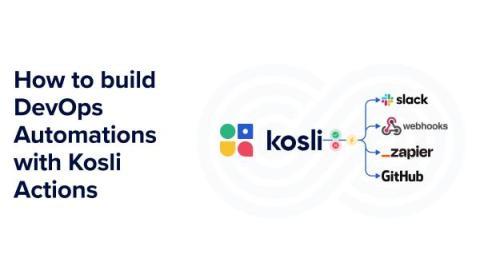
How to build DevOps automations with Kosli Actions

Kosli allows regulated organizations to scale their continuous delivery so that they can deploy changes to production at maximum speed without the risk of non-compliance. It does this by recording all of the data you need to get through regulatory events like audits. With Kosli you can record everything that happens in your software delivery process from initial requirement all the way through to deployment to production. Events like builds, tests, scans, code reviews, etc.

Practical Zephyr - Kconfig (Part 2)

In this second article of the “Practical Zephyr” series, we’ll explore the kernel configuration system Kconfig by looking at the printk logging option in Zephyr. We won’t explore the logging service as such in detail but instead use it as an excuse to dive deep into Kconfig. Finally, we’ll create our own little application-specific Kconfig configuration. Like Interrupt? Subscribe to get our latest posts straight to your inbox.

The need for speed: achieving high data rates from data centre to cloud

Having decided to embrace the opportunities of the cloud, be it a full migration, or developing a hybrid infrastructure, one of the first questions a business faces is how to transfer all its data into the cloud. This question will evolve rapidly, as the business realises that not only must it continually transfer new data to the cloud, but that the amount of data is going to grow massively.