Operations | Monitoring | ITSM | DevOps | Cloud

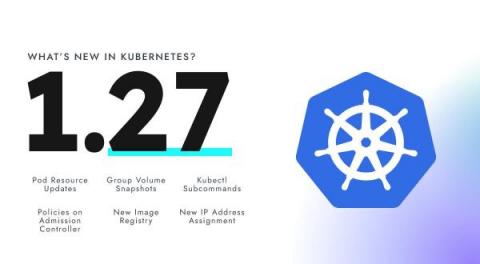
Kubernetes 1.27 - What's new?

This release brings 60 enhancements, way up from the 37 enhancements in Kubernetes 1.26 and the 40 in Kubernetes 1.25. Of those 60 enhancements, 12 are graduating to Stable, 29 are existing features that keep improving, 18 are completely new, and one is a deprecated feature. Watch out for all the deprecations and removals in this version! The main highlight of this release is actually outside Kubernetes.

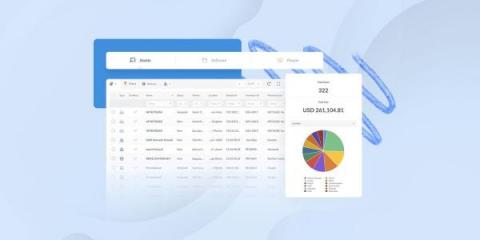
IT Asset Management Reporting: 10 Reports to Improve Your ITAM Strategy

IT Asset Management reporting is essential for agents to plan their ITAM strategy in greater detail. Reports provide valuable insights that enable you to make informed decisions and identify areas that need improvement. By leveraging them, you can thoroughly understand your organization's IT infrastructure and associated costs, enabling you to maximize IT expenses and performance. It's common to get stuck in the daily loop without having a moment to stop and analyze possible weaknesses.

eBPF Explained: Why it's Important for Observability

eBPF is a powerful technical framework to see every interaction between an application and the Linux kernel it relies on. eBPF allows us to get granular visibility into network activity, resource utilization, file access, and much more. It has become a primary method for observability of our applications on premises and in the cloud. In this post, we’ll explore in-depth how eBPF works, its use cases, and how we can use it today specifically for container monitoring.

Create a service catalog that grows with you

When your incident response process is centered around a service catalog, responders are able to more quickly pinpoint the service or functionality that’s down, bring in the team or experts, and then get to solving the problem faster. Saving even a few minutes can have a big impact on decreasing the costs around incidents and outages, so having up-to-date service details at your fingertips can make all the difference.

The Ultimate Guide to Onboarding New Work-From-Home Employees

Does it not strike you as strange that even after the world has coped with the COVID crisis, work from home did not end? We shall not examine the reasons behind the continuation of work-from-home culture. However, it is important to be cognizant of the fact that work-from-home is here to stay, and organizations need to adapt to it quickly. One of the major concerns for organizations today is onboarding new work-from-home employees.

Adaptive AI in 2023: Components, Use Cases, Ethics & Potential of Adaptive AI

AI is no longer optional for most businesses — and it’s far from a differentiating factor. In fact, researchers found that over 95% of companies have AI initiatives underway. To get ahead of the competition, leaders need to: Adaptive artificial intelligence (AI) is the next generation of AI systems. It has the ability to adjust its code for real-world changes, even when the coders didn’t know or anticipate these changes when they wrote the code.

What is Generative AI? ChatGPT & Other AIs Transforming Creativity and Innovation

Upon its release in November 2022, ChatGPT stunned Silicon Valley and the world. OpenAI, a small company based in San Francisco, introduced a chatbot that mimics complex emotions, writes code and answers complex questions. Technology considered a decade away was now at everyone’s fingertips and quickly became the fastest-growing app in history. Just four months later, OpenAI launched a significant update, ChatGPT-4, and the results of this new technology are fascinating.

Serverless Architecture Explained: Easier, Cheaper, FaaS vs BaaS & Evolving Compute Needs

Want to build websites and apps in a way that’s both easier and cheaper? Well, it’s possible even for major organizations and international companies. In this article, let’s take a look at how serverless architecture and computing is changing the game for software developers. We’ll start at the very beginning and walk through how serverless works, how we got this far, and the pros & cons of this approach.

Monitor NGINX Performance Automatically with AppSignal

Understanding how NGINX performs can be overwhelming. There are many data points to follow, and it can be tricky to know which ones are relevant to you and which ones you can ignore. In this article, we'll explain how you can use AppSignal to monitor NGINX, expanding your visibility over your application's performance.