Operations | Monitoring | ITSM | DevOps | Cloud

Squadcast + HaloPSA Integration: Enabling Streamlined Incident Response & Alerting

HaloPSA is a modern and intuitive all-in-one professional services automation (PSA) solution, designed for service providers. HaloPSA’s cloud platform helps you manage your entire business, modernize customer experience and automate your service. If you use HaloPSA for PSA requirements, you can integrate it with Squadcast, an end-to-end Incident Response and Reliability Workflow platform, to route detailed alerts from HaloPSA to the right users in Squadcast.
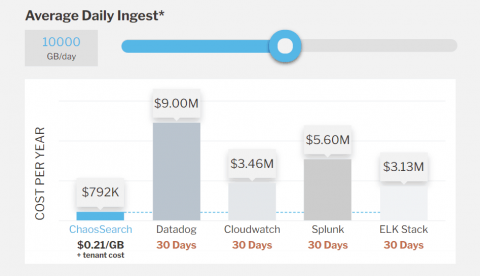

ChaosSearch Pricing Models Explained

ChaosSearch was built for live analytics at scale on cloud storage. Our architecture was designed for high volume ingestion of streams & analytics at scale via ElasticSearch & Trino API via a stateless fabric that can scale to meet the customers’ scale & latency requirements. Because we don’t store any data, under the hood, ChaosSearch is basically a set of containers that are deployed in cloud compute instances in a dedicated VPC to each customer managed by ChaosSearch.

El Salvador government healthcare institution saves up to $400,000 by using OpManager

Instituto Salvadoreño del Seguro Social (ISSS) is an El Salvadorian government institution that provides health care services to the people of El Salvador. The institution offers insurance, medical treatment, prescription home delivery, and other health-related services. There are about 114 branches throughout El Salvador.

What is Context Propagation in Distributed Tracing?

In modern microservices-based applications, it is difficult to get an overview of how requests are performing across multiple services, infrastructure, and protocols. As companies began moving to distributed systems, they realized they needed a way to track requests in their entirety for debugging applications. Distributed tracing is a technology that was born out of this need.

Introduction to Azure Storage Service Encryption

Microsoft Azure is a leading cloud service provider that offers a wide range of storage solutions. One of its essential features is the Azure Storage Service Encryption (SSE) which helps organizations protect their data at rest. This article will dive deep into the world of Azure Storage Service Encryption, discussing various encryption types, their applications, and best practices for implementing encryption in your Azure storage accounts.

Developer environments should be cattle, not pets

Cattle, not pets is a DevOps phrase referring to servers that are disposable and automatically replaced (cattle) as opposed to indispensable and manually managed (pets). Local development environments should be treated the same way, and your tooling should make that as easy as possible. Here, I’ll walk through an example from one of my first projects at incident.io, where I reset my local environment a few times to keep us moving quickly.

5 Tools for Managing a Network from a Remote Location

If you’re responsible for overseeing a network infrastructure, but you’re not always on-site to complete tasks and tackle issues in person, you need the right tools to empower you in your admin efforts. There’s a diverse array of resources out there which will enhance your network management capabilities, even when you’re working remotely. Here are just a few examples of must-have apps for you and your team in this context.

How to Cut Through SIEM Vendor Nonsense

If you’re in need of new SIEM tooling, it can be more complicated than ever to separate what’s real and what’s spin. Yes, Logz.io is a SIEM vendor. But we have people in our organization with years of cybersecurity experience, and they wanted to share thoughts on how best to address the current market. Our own Matt Hines and Eric Thomas recently hosted a webinar running through what to look out for titled: Keep it SIEM-ple: Debunking Vendor Nonsense. Watch the replay below.

How to Choose the Right Database in 2023

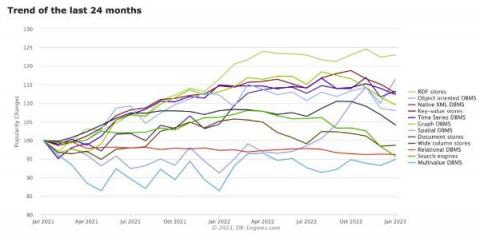
Databases are often the biggest performance bottleneck in an application. They are also hard to migrate from once being used in production, so making the right choice for your application’s database is crucial. A big part of making the right decision is knowing what your options are. The database landscape has been changing rapidly in the past few years, so this article will try to simplify things for you by going over the following topics.

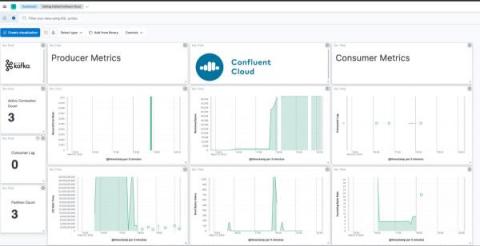
How to monitor Kafka and Confluent Cloud with Elastic Observability

The blog will take you through best practices to observe Kafka-based solutions implemented on Confluent Cloud with Elastic Observability. (To monitor Kafka brokers that are not in Confluent Cloud, I recommend checking out this blog.) We will instrument Kafka applications with Elastic APM, use the Confluent Cloud metrics endpoint to get data about brokers, and pull it all together with a unified Kafka and Confluent Cloud monitoring dashboard in Elastic Observability.