Operations | Monitoring | ITSM | DevOps | Cloud

Getting ahead of global regulations

In today’s world, the fitness of compliance and risk professionals is being tested like never before. Like the surfers who founded ServiceNow, we must find ways to get ahead of each new wave of federal and global regulations and ride as gracefully as we can—or wipe out. The key is to be proactive rather than reactive. No matter the regulation or resources at one’s disposal, the basic principles of establishing a strong compliance practice cannot be ignored.


5 Essential Things Every FinOps Team Needs

Every time your company onboards a new client or releases a new product, your cloud bill will grow. In fact, it doesn’t take a large event at all to see a spike. Whenever your company changes direction even slightly, it can affect the bottom line. Add to that factors such as economic inflation and increased demand for high-speed, high-power cloud services, and it may seem like each month’s cloud bill is higher than it was before. If that’s the case for you, you’re not alone.

Continuous Monitoring: 5 Tools to Give You Peace of Mind

If you’re part of the DevOps, SecDevOps, or IT team, you would agree that continuous monitoring of the entire IT systems and networks is vital. And this explains why 70% of businesses treat preventing downtime as a priority to avoid causing significant issues in the future. So monitoring your IT infrastructure constantly with a continuous monitoring plan is one way of improving efficiency and productivity.

Platform Engineering 101: Origins, Goals, DevOps vs SRE & Best Practices

Platform engineering is the practice of automating infrastructure operations and enabling self-service infrastructure capabilities within collaborative Dev, Ops and QA teams. It involves designing and building platforms, technologies and workflows that enable self-service capabilities to automatically manage, provision and operate complex modern software architecture environments.

New APM Capabilities Help Optimize Application Performance Across Monoliths or Microservices

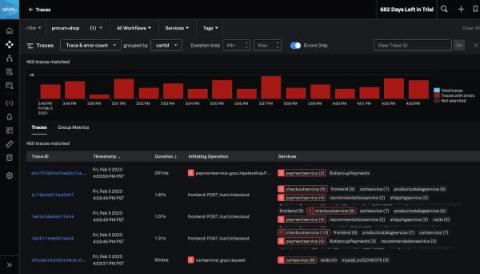
With the goal of helping you get to the “why” faster, Splunk Observability recently announced several new enhancements to reduce noise and provide more visibility when isolating problems in your environments. Specific to applications and services, whether you operate monolithic or microservices architectures our releases help you easily investigate problems in complex environments. Here’s a roundup of the recent Splunk APM capability releases, and helpful links to help get started now.

Frontend vs. backend: How to plan your performance testing strategy

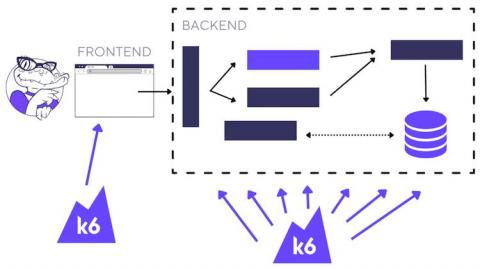
There are many aspects of application performance, but they broadly fall into two categories: frontend performance and backend performance. As a tester, it’s important to know the differences between the two and how that impacts the way you approach your tests. In this blog, I’ll provide a high-level overview of frontend performance testing and backend performance testing, including pros and cons of each one.

How To Improve Performance of SaaS Applications using Nexthink

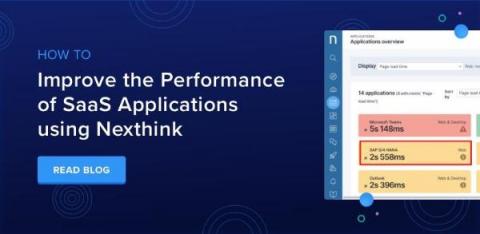
In today’s dynamic and rapidly changing environment, organizations deploy most, if not all of their business solutions using SaaS applications. This fast-paced digital transformation makes it critical for organizations to ensure the performance of SaaS applications, so that these applications can meet end user demands and provide the expected experiences. IT teams must ensure their SaaS applications are functioning well, facilitating productivity rather than inhibiting it.

Five Free Tools to Monitor Microsoft Teams Performance

Microsoft Teams has become a popular platform for remote communication and collaboration, especially since the outbreak of the COVID-19 pandemic. As more and more businesses rely on Microsoft Teams to communicate and work together, it’s crucial to ensure that the platform is performing optimally and to measure and improve Microsoft Teams performance. Fortunately, there are free tools available to help you monitor the performance of Microsoft Teams.

The Five Sources of Microsoft Teams Call Quality Issues

Microsoft Teams call quality issues can stem from a lot of places. People often jump to blame Microsoft when they’re having a call or video breakup. But, the reality is that while this does happen, more often than not it’s an external factor to the Microsoft service itself. To give you some insight into where your Teams problems come from we put together this easy primer on the five most common sources of Teams call quality issues.