
Operations | Monitoring | ITSM | DevOps | Cloud

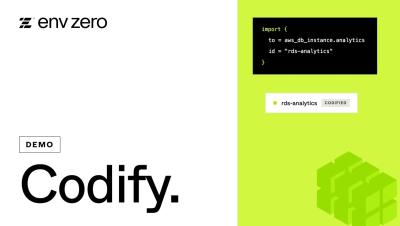
env zero Demo: Codify Everything

Turn manually-created cloud resources into Infrastructure as Code, then package that code into reusable templates your whole team can deploy. This walkthrough covers two env zero capabilities that work well together: using Cloud Compass to codify click ops resources into Terraform or OpenTofu, and building reusable templates so other users can deploy proven infrastructure without writing code or configuring integrations themselves.
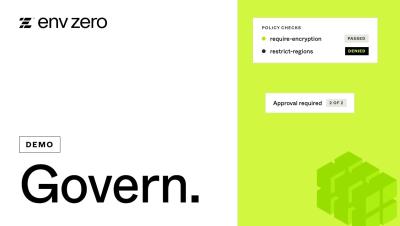
env zero Demo: Govern Continuously

How env zero keeps Infrastructure as Code under control at scale — custom roles and permissions, Policy as Code guardrails, and automated drift detection with remediation. This walkthrough covers env zero's governance features: building granular custom roles for your teams, enforcing policy guardrails that stop bad configurations before they deploy, and catching infrastructure drift the moment someone changes something outside the platform.

env zero Demo: Accelerate Self-Service Infrastructure

How env zero turns Infrastructure as Code into true self-service—developers deploy pre-approved infrastructure in a few clicks, and multi-step workflows handle the complex stuff automatically. This walkthrough shows what happens once discovery, codification, and governance are in place: developers pull from a catalog of approved resources without filing tickets or writing Terraform, and platform teams keep their guardrails intact. We also cover workflows, which chain multiple deployments into a single run.

dbForge Studio for PostgreSQL + AI Assistant: Features and Use Cases

PostgreSQL database development involves much more than writing and executing queries. Developers build applications, DBAs maintain database performance and reliability, analysts turn raw data into insights, and DevOps teams automate database delivery through CI/CD pipelines. In this video, you will see how dbForge Studio for PostgreSQL brings database development, management, data analysis, reporting, and automation into a single AI-powered PostgreSQL IDE.

Policy-as-code vs. policy-as-documentation: The difference that matters

A documented policy only works if every engineer remembers it, every time, under deadline pressure. That's the gap policy-as-code closes. This video covers what that actually looks like in practice: The instructions don't change. What changes is whether something actually enforces them, or just hopes someone reads them.

Incident Management: 20 Years of Change

Incident management fundamentals still apply, even as hybrid cloud and Kubernetes reshape incidents. Garrett Douglas joins LogicMonitor's Coffee and Context on why one failure floods ITOps with alerts and fuels alert fatigue. The bottleneck is incident context: knowing which alerts matter for incident response. Forrester's report Incident Management Has Outgrown Its Playbook frames context as the new competitive advantage.

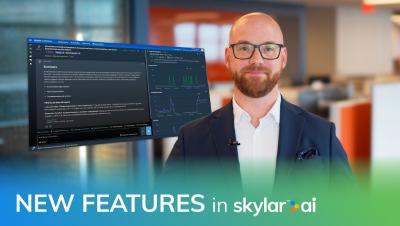
A Look Inside Skylar AI: New Features and Updates

See what’s new in the latest Skylar AI release as Vice President of Skylar AI Douglas "DJ" James walks through updates designed to deliver smarter insights, stronger connectivity, more trustworthy answers, and greater deployment flexibility. New features and updates include: Explore the latest Skylar AI capabilities and see how ScienceLogic continues to deliver smarter insights, greater flexibility, and trusted AI for modern IT operations.

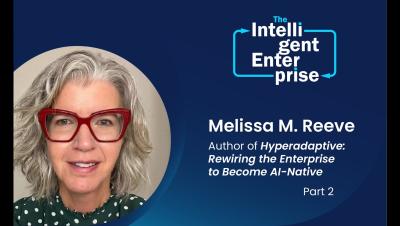
Episode 15 - Melissa M. Reeve (part-2)

When it comes to effectively rolling out AI in companies, middle managers may be more important than ever as the link between strategy and daily work. In Part 2 of this conversation on The Intelligent Enterprise, host Tom Stoneman continues his conversation with Melissa M. Reeve, author of Hyperadaptive: Rewiring to Become an AI-Native Organization, to dig into the practical side of how businesses can become AI-native. Melissa argues that AI should be treated less like a software rollout and more like the arrival of the personal computer in the 1990s.