Operations | Monitoring | ITSM | DevOps | Cloud

Shai-Hulud style attacks need more than scanning

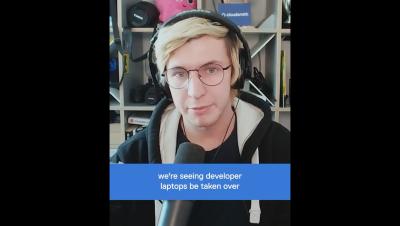
Pre-install scripts mean a malicious package can compromise a developer's laptop the moment it's pulled – no build, no deploy, no install required. That breaks the old model where scanning catches a bad package after the fact, when it's already too late. The fix is active policy enforcement at the point of pull, using signals like package age, signed provenance, and maintainer trust to filter out malicious packages before they ever land.

The AI Software Engineering Revolution, feat. Anthropic | Big Tent S3E9

In this episode of Grafana's Big Tent, hosts Mat Ryer (Senior Director of AI, Grafana Labs) and Tom Wilkie (CTO, Grafana Labs) sit down with Eric Burns, Field Executive Architect at Anthropic, to talk about building trust between tech and business execs, why Anthropic bet early on running across every major cloud, and what it was like watching large language models go from "interesting" to "obviously the future" in real time.

Is SQL Server really "too legacy to love"? | The Simple Talk Podcast

In a recent article, The Register suggested that SQL Server is “too lucrative to ditch, but too legacy to love” - but is that actually true? With many years’ SQL Server, PostgreSQL and Oracle experience between them, Steve Jones, Kellyn Gorman, Grant Fritchey, and Pat Wright offer their thoughts on the article, and the current state of SQL Server as a whole - including how it fares against other databases in 2026.

When Does a Self-Service Portal Actually Reduce Tickets?

A self-service portal is designed to reduce IT support tickets by enabling employees to solve common issues on their own. But if self-service is supposed to improve efficiency, why do so many portals remain unused while help desk queues continue to grow? In this video, you'll learn what a self-service portal is, why many organizations struggle with low adoption, and the three key factors that determine whether your portal actually reduces ticket volume.

How to Trace Microservices WITHOUT OpenTelemetry

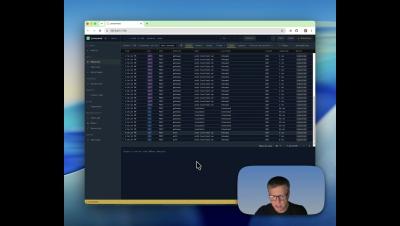
Learn how to trace complex multi-hop transactions across microservices when OpenTelemetry isn't available or trace parents get lost. This quick tutorial demonstrates how to use full-text search in proxymock (a free CLI and UI tool) to isolate user journeys (like looking up a specific username) and instantly generate waterfall tracing views. Whether you are working locally or in a Kubernetes cluster, you can record API traffic, visualize multi-hop requests, and easily transition those captures into load or regression tests.

Build an SRE Agent Harness for AIOps Without Context Blowout

An agent harness for AIOps is the runtime layer that coding agents like Claude Code were never built to provide: context isolation, decision traceability, and gated execution for tools that touch production. Aura is Mezmo's open-source (Apache 2.0) agent harness, purpose-built for operations work rather than software development.

Skylar Advisor Guided Walkthrough

Learn how Skylar Advisor helps IT operations teams move beyond monitoring to AI-driven operational intelligence. In this walkthrough, you'll see how Skylar Advisor helps operators investigate issues, identify meaningful operational risks, collaborate more effectively, and predict potential problems before they impact services. In this video you'll discover Skylar Advisors key features like: By combining Ask Skylar, investigations, advisories, and predictions, Skylar Advisor helps IT teams reduce noise, focus on what matters most, and proactively improve service reliability.