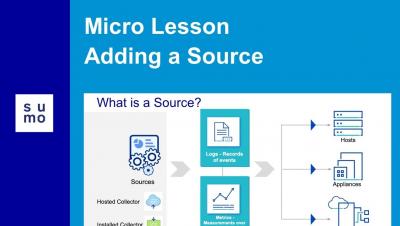
Micro Lesson: Adding a Source
This video provides the overview of sources for Installed and Hosted Collectors and shows how to add a Local File Source in Sumo Logic.


The latest News and Information on Log Management, Log Analytics and related technologies.
Remember when you wanted great alerts, so you read our past two blogs about cyclical statistical forecasts and anomalies? Hopefully, the techniques in those blogs gave you some great results. Here we’re going to show you another way of finding anomalies in your data using a slightly different technique.
Over the past 24 months or so, I have been studying investing/trading while also working to become more proficient with Splunk. I like to combine activities and gain momentum, so I decided stock market and economic data would be the perfect way to dig deeper into Splunk and hopefully improve my investing/trading. In the beginning, I only looked at it as a way to learn more about Splunk while using data that was interesting to me.
How would you like to be in touch with what’s happening at your doorstep at all times — whether it’s a package delivery, or your loved ones arriving home — no matter where you are? Now think about the folks at Arlo, a leading home automation company, who deliver on this promise for 3.4 million homes in over 100 countries. We hear from Suma about how she uses Arlo to get notified as soon as her kids arrive home from school.
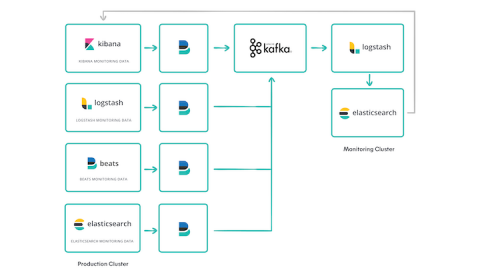
In a previous blog post, we introduced a new method of monitoring the Elastic Stack with Metricbeat. Using Metricbeat to externally collect monitoring information about Elastic Stack products improves the reliability of monitoring those products. It also provides flexibility with how the monitoring data may be routed to the Elasticsearch monitoring cluster.
What makes data structured or unstructured and how does that affect your logging efforts and information gain? Below we've provided a comparison of structured, semi-structured, and unstructured data. Also below, we discuss ways to turn unstructured data into structured data.
So, you’ve installed Coralogix’s STA and you would like to start analyzing your traffic and getting valuable insights but you’re not sure that you’re mirroring enough traffic or wondering if you might be mirroring too much data and could be getting more for less. The harsh truth is that in order to be able to detect everything, you have to capture everything and in order to be able to investigate security issues thoroughly, you need to capture every network packet.