Workshop Basic Remote Monitoring | Pandora FMS
In this workshop we will discover in depth how to do a basic remote monitoring with the all-in-one monitoring tool Pandora FMS.


The latest News and Information on Monitoring for Websites, Applications, APIs, Infrastructure, and other technologies.
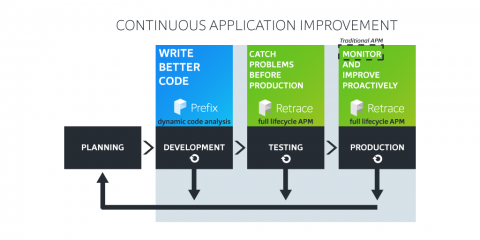
CAI stands for Continuous Application Improvement. It is a software improvement process that is implemented at each step of the SDLC, ensuring immediate feedback at each step rather than waiting till risk levels and impact has gone up. When you implement CAI you shift your improvement process as far left as possible and you catch software bugs and performance problems where they are introduced, eliminating countless hours of time spent chasing issues.
Job titles are in constant flux these days, especially in the world of IT. While some can border on the bizarre and ambiguous (thinking of you, Mr. “Digital Sherpa” and “Software Ninja”) most titles reveal very specific clues about the nature of modern work and the changing demands of business. In the last few years, large enterprise companies have realized their digital employee experience is just as important as their digital customer experience.
Log management plays an important role in helping to debug Kubernetes clusters, improve their efficiency, and monitor them for any suspicious activity. Kubernetes is an open-source cluster management software designed for the deployment, scaling, and operations of containerized applications.
From the discovery of fire to the development of the internet, society’s need to communicate and live as a social unit has inspired endless innovation. Soon we'll be witness to the pinnacle of wireless technology: fifth-generation wireless networks (5G). By allowing users to communicate and share data at breakneck speed, 5G could prove to be a paradigm shift in information consumption and sharing.
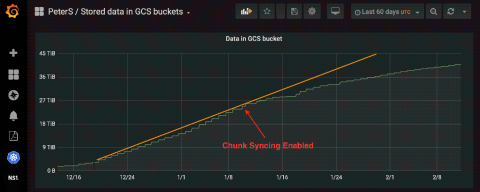
Several months ago, Bryan Boreham introduced a few changes to Cortex that massively reduced its storage requirements. The changes were quite simple and altogether had a nice benefit of using almost 3x less data storage than prior versions. Since Loki shares a lot of code with Cortex, could we use these ideas to the same effect? (Spoiler alert: Yes, we can!)
Today, we’ll dive deep into monitoring hosts. The good news is that we’ll point you to some shortcuts on how to set up host monitoring in an easy way. The bad news is that we won’t be doing any percussive maintenance on any host. To monitor hosts, you have to set a few layers in place. Doing all this by yourself would be the hard way. You may ask: “How hard could it be?”.
Remember that old commercial from the eighties of the actor Chris Robinson saying “I’m not a doctor, but I play one on TV”? (Yes, I know it’s an old commercial, but the catchphrase has definitely outshone the original product placement.) Well, I would like to start this blog post by changing things up and saying that “I’m not a Database Administrator, but I like to play one on TV!” Or, um, well, at least I like to pretend to be a DBA. Sometimes.