The latest News and Information on Serverless Monitoring, Management, Development and related cloud technologies.
Too often serverless is equated with just AWS Lambda. Yes, it’s true: Amazon Web Services (AWS) helped to pioneer what is commonly referred to as serverless today with AWS Lambda, which was first announced back in 2015. But in 2020, it’s important for enterprises to understand that the serverless landscape is much bigger with more opportunities. Serverless is sometimes (narrowly) defined as just being about functions-as-a-service, but that’s a very limited viewpoint.
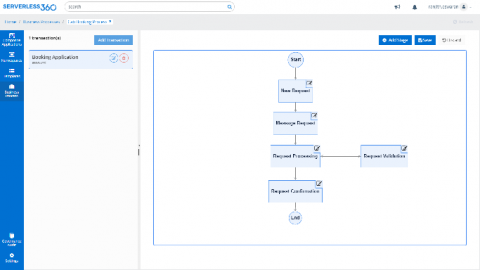
Serverless applications, due to their distributed nature, are often stuck having to reinvent the wheel. While small utility scripts and functions are often easily instrumented and monitored, anything of a transactional nature will need to implement special code to provide developers with common tools like stack traces, atomicity, and other patterns that rely on a singular flow of control.
The seamless scaling and headache-free reliability of a serverless application architecture has become compelling to a broad community of cloud specialists. But for those who have yet to become converts, a specific issue related to service startup latency—Cold Starts—has been one of the cited key objections. Fortunately, the serverless marketplace is maturing.
Next in our series on the Amazon Builders’ Library, Mike Roberts of Symphonia picks out the key insights from the article Going faster with Continuous Delivery by AWS senior manager of software development Mark Mansour.
I’d like to take a moment to point out some of my favorite things that have come across my Twitter timeline in the last week, if you’d like to see more follow Stackery on twitter!