Operations | Monitoring | ITSM | DevOps | Cloud

The latest News and Information on Serverless Monitoring, Management, Development and related cloud technologies.

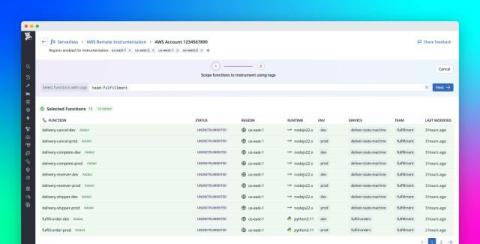
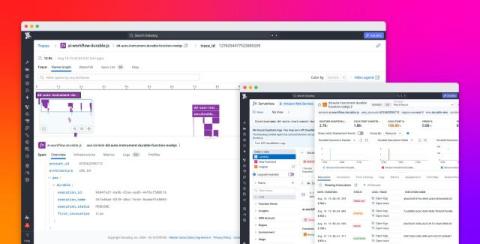
Bring faster visibility into AWS Lambda functions with remote instrumentation

Comprehensive observability is critical for running performant, reliable, and secure serverless workloads. However, configuring and maintaining that visibility across hundreds or thousands of serverless functions can be difficult to scale and sustain. Developers across teams often manage serverless functions using different infrastructure as code (IaC) frameworks, as well as different review, deployment, and update processes.
Sponsored Post

8 Challenges of Microservices and Serverless Log Management

As organizations increasingly adopt serverless architectures and embrace the benefits of microservices, managing logs in this dynamic environment presents unique challenges. In this blog, we're taking a closer look at the differences between serverless and traditional log management, as well as 8 challenges associated with log management for serverless microservices.

AWS Fargate Alternatives: Comparing Serverless Container Options

Imagine you have an API service composed of multiple microservices. Traffic fluctuates — sometimes light, sometimes spiking. Without Fargate, you’d have to manage EC2 instances, autoscaling, patching, and more. With Fargate, you define each microservice as a task, setting the CPU/memory, container image, network rules, and AWS schedules, and then run them as needed. The result: faster deployment, lower ops overhead, and smooth scaling.

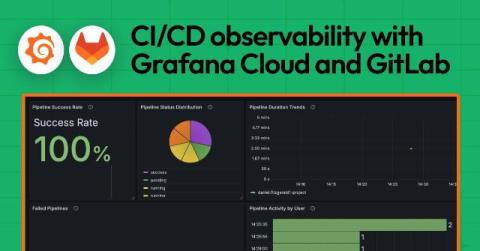
A serverless approach to CI/CD observability with GitLab and Grafana

In today’s fast-paced development environment, it’s critical that you understand what’s happening in your CI/CD pipeline. And yet, many teams struggle with fragmented tooling that makes it difficult to get a holistic view of their dev lifecycle. For example, if you’re using GitLab for CI/CD and Grafana for observability, you’ve probably faced this challenge: how do you bring your GitLab events into your existing observability and alerting infrastructure?

Elastic Cloud Serverless on Google Cloud doubles region availability

We’re pleased to announce the availability of Elastic Cloud Serverless on Google Cloud in three new regions: This doubles the number of available regions on Google Cloud and dramatically increases serverless deployment options in the US. Elastic Cloud Serverless provides the fastest way to start and scale observability, security, and search solutions without managing infrastructure.

DevOps Guide to Monitoring in Serverless Applications

Serverless computing helps teams move faster by removing the need to manage servers. Code runs only when needed, scaling up or down automatically. For DevOps engineers, this means quicker deployments and less infrastructure work. But serverless also brings new challenges. Functions run for short periods, making it hard to track errors, performance, and costs.

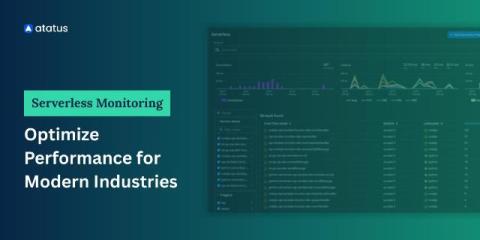
Serverless Monitoring for Modern Industries: Compliance, Scalability, and User Experience

Serverless computing has changed the way developers build and scale applications. With event-driven execution, automatic scaling, and a pay-as-you-go model, it removes the need to manage servers and helps teams move faster. This is why industries like FinTech, e-commerce, and media streaming are adopting serverless at a rapid pace. But serverless also brings new monitoring challenges. Functions are short-lived, run in different places, and are triggered by many types of events.

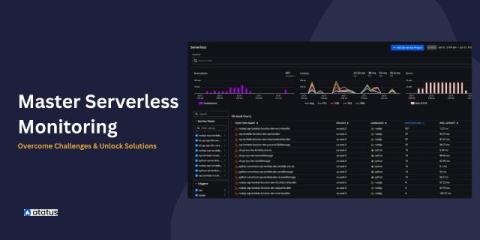
Serverless Monitoring Made Simple: Challenges and Solutions with Atatus

Serverless computing has revolutionized the way applications are built and deployed by eliminating infrastructure management and enabling automatic scaling. However, the dynamic and distributed nature of serverless architectures presents unique monitoring challenges that can impact application performance and user experience.

How to Reduce Serverless Costs with Smart Monitoring

Serverless architecture has changed how applications are built and run. It removes the need to manage servers, letting developers focus on writing code while automatically scaling with demand. But even with its pay-as-you-go model, serverless apps can get expensive if not monitored and optimized. In this blog, lets see how smart serverless monitoring helps developers and DevOps engineers lower serverless costs, boost performance, and keep operations running smoothly.

Serverless Monitoring: Essential Metrics Every Developer Should Track

Serverless applications have become one of the most efficient ways to build and deploy software. With platforms like AWS Lambda, Azure Functions, and Google Cloud Functions, teams can focus on writing code while the provider handles infrastructure, scaling, and availability. But going serverless doesn’t mean monitoring stops being important. In fact, monitoring becomes even more critical because you don’t have direct control over the servers, containers, or VMs.