Operations | Monitoring | ITSM | DevOps | Cloud

The latest News and Information on Serverless Monitoring, Management, Development and related cloud technologies.

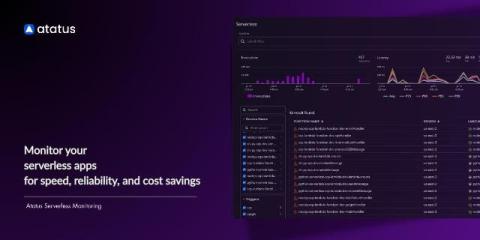
Top 10 Serverless Monitoring Tools in 2025

Monitoring serverless applications is critical to ensure optimal performance, reduce errors, and maintain end-to-end observability. Choosing the right serverless monitoring tools can help track serverless performance metrics, cold starts, and distributed traces across cloud functions. Below, we explore the top 10 cloud-native and third-party serverless monitoring solutions, highlighting their features, pros, cons, and best use cases.

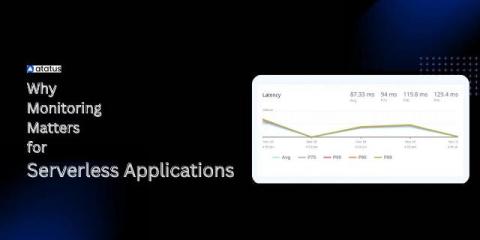
Serverless Applications: Why Monitoring is Essential for Speed and Reliability

Serverless applications are becoming the go-to architecture for modern developers. Startups and enterprises are building serverless applications because they offer scalability, cost-efficiency, and flexibility. However, these advantages come with unique challenges, especially when it comes to monitoring serverless applications. Traditional server monitoring tools fail to capture short-lived functions, making serverless application monitoring essential for maintaining performance and reliability.

Build secure and scalable Azure serverless applications with the Well-Architected Framework

Serverless platforms like Azure Functions and Azure Container Apps make it easier to scale your applications without managing infrastructure. But successful serverless apps require thoughtful planning. They must be designed to account for cold starts, unpredictable scaling behavior, and ephemeral compute lifecycles, all while ensuring secure data handling and end-to-end observability across highly distributed components.

Azure native integration elevates Elastic Cloud Serverless experience

We're thrilled to announce a significant leap forward in making Elastic Cloud Serverless even more accessible and powerful for Azure users. With the general availability (GA) of Elastic Cloud Serverless on Azure, we've just released the Azure native integration for Elastic Cloud Serverless. This builds upon our existing Azure native integration for Elastic Cloud Hosted, allowing users to seamlessly discover and manage Elastic Cloud in a way that feels inherently part of the Azure ecosystem.

Evaluating Serverless Vs. Containers And How To Choose

Containers and serverless computing are two of the most popular methods for deploying applications. With the rise of microservices and modern DevOps, teams need faster, leaner ways to build and release software. However, selecting the wrong architecture can slow down delivery, increase cloud costs, or lock you into tools that don’t scale with your business. Both methods have their advantages and disadvantages.

Monitor Lambda-hosted web apps with the Lambda Web Adapter integration

As organizations migrate their legacy web applications from containerized or server-based deployments to serverless environments, they often run into a critical compatibility challenge. Traditional web frameworks like Flask, Express, or SpringBoot are designed to run on persistent HTTP servers, not event-driven, stateless environments like AWS Lambda. The AWS Lambda Web Adapter bridges this gap by allowing teams to run web server-based applications inside Lambda with minimal changes.

Elastic's journey to build Elastic Cloud Serverless

Stateless architecture that auto-scales no matter your data, usage, and performance needs How do you take a stateful, performance-critical system like Elasticsearch and make it serverless? At Elastic, we reimagined everything — from storage to orchestration — to build a truly serverless platform that customers can trust. Elastic Cloud Serverless is a fully managed, cloud-native platform designed to bring the power of Elastic Stack to developers without the operational burden.

Serverless vs. Containers: A Comprehensive Guide to Choosing the Right Solution

In the rapidly evolving world of cloud computing, network engineers often need to decide between serverless computing and containerization. Both technologies offer unique advantages and are suited to different types of applications. This article aims to provide a comprehensive comparison of serverless computing and containers, helping network engineers make an informed decision based on their specific needs.

AWS Lambda's INIT billing update: What's changing and why it matters for your cloud costs

Starting on Aug. 1, 2025, AWS will bill for the initialization (INIT) phase of Lambda functions, bringing a key change to how you are charged for serverless workloads. This billing update will impact functions using managed runtimes with ZIP archive packaging, which previously excluded the INIT phase from the billed duration. For teams that rely heavily on AWS Lambda, this is a small but significant change. The INIT phase, while short, could introduce costs that were previously invisible.

Elastic Cloud Serverless now generally available on Google Cloud

Elastic Cloud Serverless provides the fastest way to start and scale security, observability, and search solutions — without managing infrastructure. Today, we are excited to announce the general availability of Elastic Cloud Serverless on Google Cloud — now available in the Iowa (us-central1) region. Elastic Cloud Serverless provides the fastest way to start and scale observability, security, and search solutions without managing infrastructure.