Operations | Monitoring | ITSM | DevOps | Cloud

The latest News and Information on Serverless Monitoring, Management, Development and related cloud technologies.

How to create and monitor an AWS Lambda function in Java 11

Serverless computing is a modern cloud-based application architecture in which the application’s infrastructure and support services layer are completely abstracted from the software layer. While every application still relies on physical servers to run, serverless applications shift that responsibility to cloud service providers like Amazon Web Services (AWS).

Why your serverless monitoring is failing (and how to fix it)

Monitoring systems have become absolutely critical for modern businesses, and understanding the fundamentals of application monitoring is key to success. But when it comes to serverless monitoring, the game gets even trickier. Serverless architectures, while offering incredible flexibility and cost advantages, present unique monitoring challenges that traditional approaches simply can't handle.

Three key facts about serverless reliability

Serverless computing requires a significant shift in how organizations think about deploying and managing applications. No longer do Ops teams need to think about provisioning servers, installing operating system patches, and writing shell scripts to manage deployments. While serverless takes away much of this responsibility, one aspect still needs to be handled thoughtfully: reliability. In this blog, we’ll look at three important facts about serverless reliability that teams often overlook.

Building a serverless GenAI API with FastAPI, AWS, and CircleCI

The advancement of AI has empowered businesses to incorporate intelligent automation into their applications. A serverless Generative AI (GenAI) API enables developers to harness cutting-edge AI models without the burden of infrastructure management. This guide walks you through building a scalable and cost-effective GenAI API using FastAPI, a high-performance Python framework with built-in async support and seamless AWS integration.

Why Context Matters: Mastering Serverless App Monitoring

Hi there, and welcome to the second video in this series on observing AWS serverless applications with Datadog. In this video, you’ll learn how important it is to add custom business context to the telemetry you send to Datadog and how you can use that inside APM to quickly diagnose and debug issues. You’ll walk away with an understanding of the importance of distributed tracing, as well as how you can add specific business context to the telemetry you send.

Observability for your NodeJS AWS Serverless Applications

Hi there, and welcome to the first video in this series on observing AWS serverless applications with Datadog. In this video, you’ll learn how easy it is to get started observing your serverless NodeJS applications using Datadog and the AWS CDK. You’ll also look at how you can use the Datadog console to diagnose latency issues and errors inside your application. You’ll walk away with an understanding of how to instrument your Lambda functions with the AWS CDK, as well as practical steps you can take to debug your applications.

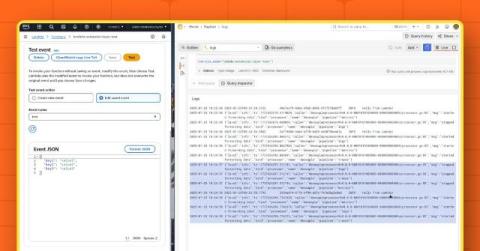
How to observe AWS Lambda functions using the OpenTelemetry Collector and Grafana Cloud

Getting telemetry data out of modern applications is very straightforward—or at least it should be. You set up a collector that either receives data from your application or asks it to provide an up-to-date state of various counters. This happens every minute or so, and if it’s a second late or early, no one really bats an eye. But what if the application isn’t around for long? What if every second waiting for the data to be collected is billed?

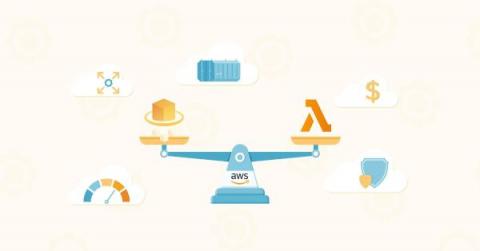
Fargate Vs. Lambda: Understanding AWS Serverless Solutions

Things are changing. Technology differences between serverless and container-based systems are rapidly blurring. In 2020, Amazon Web Services (AWS) enabled AWS Lambda to package and deploy functions as container images instead of bundling all of a function’s code and dependencies in a.zip file. Today, more organizations are increasingly deploying Lambda functions as Docker container images. These companies want to reap the benefits of serverless computing, containers, and container orchestration.