Operations | Monitoring | ITSM | DevOps | Cloud

The latest News and Information on Serverless Monitoring, Management, Development and related cloud technologies.

Seamlessly Secure Your Cloud-Native Applications with D2iQ + Aqua

As businesses embrace cloud-native application development as a basis for modernization, the shift creates significant security challenges. D2iQ has partnered with Aqua Security to enable organizations to create a seamless DevSecOps experience that accelerates the deployment of secure smart cloud-native applications to prevent and foil cloud-native cyber attacks.

Asynchronous Correlation with Serverless360 BAM

One of the critical differences between distributed tracing and business activity monitoring is that distributed tracing usually assumes that your transaction executes from start to end in a reasonably short time. An example would be that your call to an API might then drop a message on a queue which a function processes and loads into a database.

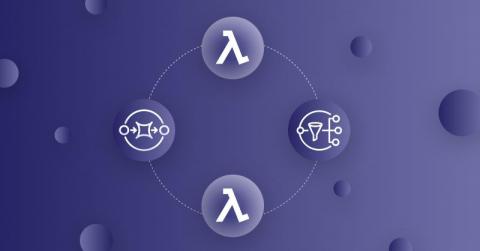
Quick Bytes - Observing Lambda with SNS & SQS

You can see and understand Lambda → SNS → SQS → Lambda transactions as one complete trace, end-to-end. This view gives you critical context into one of the most common–but unobservable–serverless architectures so you can troubleshoot it faster and easier. Make sure to subscribe so you don't miss out on any new livestreams and observability content! With one-click distributed tracing, Lumigo lets developers effortlessly find and fix issues in serverless and containerized environments

Monitoring and Debugging Python Apps on AWS Lambda

As a developer, Python for me is a heavy-lifting and versatile language. I’ve used it for building APIs, internet of things projects, file and data conversions, machine learning and (of course) web development. Like with any modern, commonly used language, the functionality behind the application is only as good as the infrastructure that it is deployed onto.

Business Activity Monitoring with Flat File Messages

Let us consider that you have implemented an integrated solution and are using Serverless360 Business Activity Monitoring (BAM) to help provide your support users and business users with visibility of what is happening in the business transaction. BAM provides you with distributed tracing to attain maximum visibility on the integration solution that the functional operations team needs.

Logic App Best practices, Tips, and Tricks: #14 Implement good governance policies

Welcome again to another Logic Apps Best practices, Tips, and Tricks. In my previous blog posts, I talked about some of the most essential best practices you should have while working with the Azure Logic App: And some tips and tricks: Today I’m going to speak about another critical Best practice, Tips and Tricks that you need to implement while administrating your cloud integration resources: Implement good governance policies.

Tracing and Observing AWS ECS

It’s no secret that application containerization has revolutionized the digital world as we know it by providing a transient gateway into elastic infrastructure that can scale and grow as needed. Where traditional virtualization was all about creating a single homogenous entity, containers are self-contained units of software, able to run in just about any environment, making them extremely portable.

Get the Most Out of Serverless for Fleet Management Apps

You’ve probably seen Rush Hour, a logic puzzle where you have to slide cars and trucks out of the way to steer the red car towards the exit. In real life, when your customers are responsible for tracking hundreds or thousands of data points from dozens of valuable, mission-critical sensors, you’re tracking engine speed, network signal level, distance from the RF, and more—and not just through traffic but across continents.

Why and How to Monitor AWS Elastic Load Balancing

When building systems that need to scale above a certain number of users, we usually can’t stay on one machine. This is where cloud providers like AWS usually come into play. They allow us to rent VMs or containers for small intervals. This way, we can start a few different machines when more traffic hits, and when it goes down later, we can simply turn off our extra capacity and save money. The question is, how does all this traffic get to our new machines? AWS Elastic Load Balancing!

Shine Some Light on Your SNS to SQS to Lambda Stack

The combination of SNS to SQS to Lambda is a common sight in serverless applications on AWS. Perhaps triggered by messages from an API function. This architecture is great for improving UX by offloading slow, asynchronous tasks so the API can stay responsive. It presents an interesting challenge for observability, however. Because observability tools are not able to trace invocations through this combination end-to-end. In X-Ray, for example, the trace would stop at SNS.