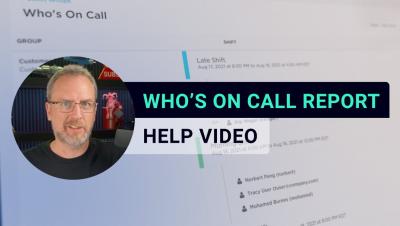
Who's on Call Report - xMatters Support
The ‘Who’s on Call?’ report in xMatters gives you an at-a-glance view into the on-call status across the groups in your organization.


We're very pleased to announce that incident.io is now SOC 2 compliant, having successfully completed our Type I audit. Put simply, this means an external auditor has looked at how the company is operating, and how our software is managed and operated, and confirmed that we meet a set of high security standards.
At Avantra, our customers trust us to keep their business operations based on SAP running smoothly. I have written in the past about the importance of SAP security, and how I believe that in the next few years, SAP risks becoming an attack vector for hackers. It should come as no surprise that security is an area in which Avantra has invested significantly since I became CEO.
In the latest episode of Network AF, your host Avi Freedman chats with Zac Smith. Zac is a 20-year networking veteran, the managing director of Equinix Metal, and a double bass player. Throughout Zac’s career, he’s focused on using software to build automated infrastructure platforms. That includes growing Voxel, the Linux-based hosting platform that sold to Internap in 2011, into one of the early, leading cloud-hosting companies.
This gives new meaning to the term “wired and tired.” A brand-new survey from Ivanti finds that IT professionals have never been considered more critical to a company’s operations and success, and yet in spite of – or perhaps because of – that pressure, they’re facing a mountain of obstacles and unrelenting fatigue.
As an Engineering Manager, I don't get the chance to dig into code as much as I did when I was a developer. Catchpoint's semi-annual hackathon provided me that opportunity last month.
Let’s take a look together at the features and improvements included in the new Pandora FMS release: Pandora FMS 759.