New SolarWinds data highlights widespread fragmentation and infrastructure challenges, limiting AI's impact and scalability across public sector services.
Distributed systems don't just fail. They adapt. Services in Tencent Cloud environments are tightly interconnected. Compute, load balancing, databases, and networking layers continuously respond to each other based on changing conditions. Under normal load, this coordination stays in the background. As pressure builds, the behavior shifts. The system does not degrade in a straight line. Instead, it starts adjusting itself.
Operational visibility is becoming increasingly important as infrastructure teams are asked to support AI initiatives, automation goals, cost accountability, modernization efforts, and growing operational complexity at the same time. Most are expected to do it without expanding headcount, introducing additional risk, or rebuilding the environment from scratch. Those expectations are changing the role of infrastructure operations.
Three-quarters of office professionals (75%) say they would be likely to look for a new job that offered better AI skills development, a figure that climbs to 80% at companies with $1 billion or more in revenue.
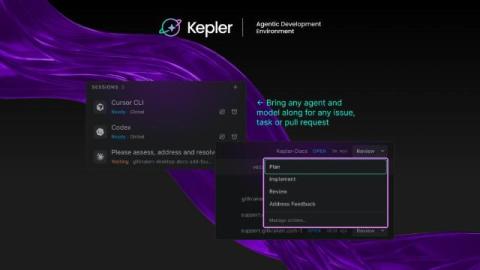
You've felt it. You're deep in a flow state with Claude or Cursor, building the next great thing, and then you hit the wall. Time to leave your editor, open a browser, click through a console, copy a connection string, paste it back, and pray you didn't fumble a character. The vibe is gone. What if your AI agent could just... do it? Deploy the database. Create the Kafka topic. Ship the app. All without you ever leaving the conversation. Today, that's real.
Modern IT environments generate huge volumes of telemetry across infrastructure, applications, cloud services, and networks. Teams now have more data than ever, but that does not automatically lead to better decisions. In many organizations, the real problem is no longer visibility alone. It is the ability to identify which signals matter, understand what they mean, and respond before users or business services are affected.
Mission-critical networks are changing fast. Utilities, transport operators, and critical infrastructure providers are under pressure to deliver more data, more automation, and more resilience—without ever compromising reliability. The challenge is simple: legacy SDH/SONET networks were built for a different era. They still deliver reliability. But they can’t support what comes next.
Three days, 20 talks at Devoxx France 2026. The through-line wasn't AI hype - it was discipline. Context engineering, code review under AI volume, and the local-vs-remote question now shaping security, cost, and sovereignty. Fabien is a senior software engineer at Qovery. He writes about platform engineering, AI tooling, context engineering, and the practical realities of running modern developer infrastructure.
Civo Platform Engineer M R Rishi demonstrates how to go from zero to self-hosted AI in minutes using Konstruct. While most teams are stuck managing thousands of configuration values across multiple models and tools, Rishi shows how Konstruct eliminates that complexity with GPU cluster provisioning, GitOps catalog deployments, and production-ready infrastructure on day zero.
Your best engineer spent 500,000 tokens last week. Nothing shipped. There's a name for it now: tokenmaxxing. Failed prompts, dead PRs, code that never reaches production — it looks like productivity, but it isn't. Most engineering leaders can't tell you what percentage of AI-generated code actually ships, or where the budget went. You should be able to say "that bug cost me $2,700 in tokens to fix.".