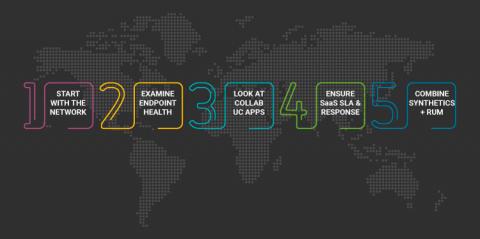
Budgeting for user experience management solutions has been dynamic recently. When the pandemic hit, corporations freely opened the purse strings to ensure that employees had the tools to work outside the traditional office. The Return on Investment (ROI) for improving the overall Digital Employee Experience (DEX) didn't matter so much. With inflation now the main topic in executive meetings, the strings for DEM/DEX investments have been drawn tighter. Gartner has published a report titled "Market Guide for Digital Experience Monitoring" which states that "enterprises that invest in DEM solutions can expect a 30% reduction in Mean Time to Resolution (MTTR) and a 20% reduction in downtime."
If you want to deliver an outstanding user experience you must know the differences between DEM and RUM. In this modern world, businesses are embracing digitization to provide better services to their customers. However, customer expectations and preferences have changed drastically over time. To address customer demands, businesses have started investing in systems and applications that enhance the user experience.
Before the pandemic, capturing your users’ experience was simple because just about everyone was in the office, and you had traditional on-premises systems in place. Nowadays, remote work and hybrid access and usage patterns are much more varied. Work hours, 24×7 availability, collaboration, networking, hybrid, etc. all lead to difficulties in understanding employee Digital Experience.
Here's a scenario. All your enterprise apps are running fine, as you expected. Maybe your team wasn't impacted by the Microsoft 365 outage a couple of weeks ago. Good for you! But don't let past application performance predict current performance. Instead, choose real-time monitoring to efficiently manage your network and proactively resolve app health issues at any time. That way, the IT operations (ITOps) team has visibility into your entire digital estate and pinpoint services unavailable to end-users.
Here we go again. If 2022 wasn’t enough, there are new challenges in 2023 staring right at information technology leaders. As interest rates rise and consumer demand slows, companies plan to cut costs and do more with less. But what does all this mean for you? Amid this uncertainty, the IT operations department must adapt well to these changes. Because if they don’t, the business they support will be disadvantaged.