The 2023 SRE Report provides the broadest independent insights into SRE Practices
Findings from the 5th edition of The SRE Report show that lower TCO, Driving Growth and Retaining Customers are Key Business Drivers for Adopting SRE Practices.


Distributed denial of service (DDoS) attacks are an ongoing issue for communications service providers, putting critical systems at risk, undercutting service level agreements, and bringing unwanted headlines. In the first half of 2022 6 million of these attacks were reported. Some metrics of DDoS attacks in 1H2022 compared to 2H2021.
Most well established data teams have a clear remit and a well defined structured for what they work on and when: from the scope of their role (from engineer to analyst) to which part of the business they work with. At incident.io, we have a 2 person data team (soon to be 3) with both of us being Product Analysts.
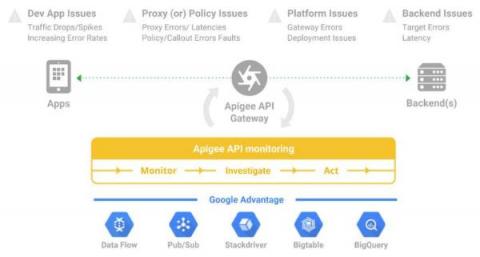
Maintain high uptime and performance for your APIs without any overheads using Google Cloud’s API monitoring tools.
Looking at the report that Gartner did in 2022 regarding top technology trends, AI engineering represents an important pillar in the near future. It is composed of three core technologies: DataOps, MLOps and DevOps.The discipline’s main purpose is to develop AI models that can quickly and continuously provide business value. For instance, models that enable cross-functional collaboration, automation, data analysis, and machine learning.
On 8 November 2022, at Open Source Experience Paris, Canonical announced that Charmed Kubeflow, Canonical’s enterprise-ready Kubeflow distribution, now integrates with MindSpore, a deep learning framework open-sourced by Huawei. Charmed Kubeflow is an end-to-end MLOps platform with optimised complex model training capabilities designed for use with Kubernetes.
In an era where there’s no shortage of established best practices and tools, engineering teams are consistently finding their ability to prevent, detect and resolve production issues is only getting harder. Why is this the case? Our most recent DevOps Pulse Survey highlighted alarming trends to this end.
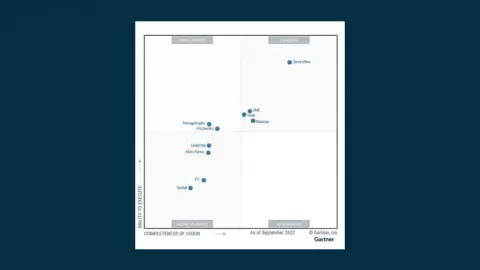
I’m proud and humbled to announce ServiceNow is a Leader in the 2022 Gartner® Magic Quadrant™ for IT Service Management (ITSM) Platforms for the ninth year in a row. We also ranked first in all three use cases evaluated in the 2022 Critical Capabilities for ITSM Platforms: Service Desk (3.76/5), Service Operations (3.73/5), and Business Workflow Automation (3.81/5).