Operations | Monitoring | ITSM | DevOps | Cloud

Integrating Squadcast with Jira (Cloud & Server) - Create tickets & bidirectional sync | Squadcast

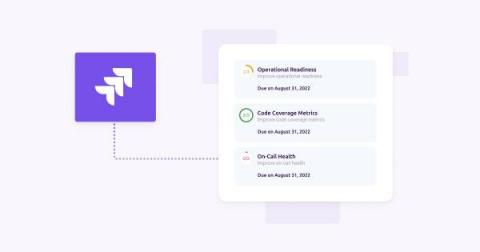
You can use this integration guide to install and configure the Squadcast extension in Jira Cloud & Jira Server to create issues in Jira projects when there is an incident in Squadcast. Also learn to automatically or manually sync the status bidirectionally.

Integrating Slack & Squadcast- Trigger, Acknowledge, Resolve & Reassign incidents from Slack channel

You can integrate Squadcast and Slack to collaborate efficiently with your team while working on incidents. Squadcast sends a notification to the configured Slack Channel as soon as an incident is triggered.

Integrating Microsoft Teams & Squadcast - Acknowledge, Resolve & Reassign Incidents | Squadcast

Teams using MS Teams can now integrate with Squadcast and easily Acknowledge, Resolve & Reassign incidents using MS Teams. You can configure Squadcast to send a notification to the configured MS Teams channel as soon as an incident is triggered.

Tagging & Routing at Squadcast | Incident Management | Squadcast

Event Tagging is a rule-based, auto-tagging system with which you can define customized tags based on incident payloads, that get automatically assigned to incidents when they are triggered. Auto-add relevant information like priority, severity or alert type to make incoming incidents context-rich. Route alerts to the right responder(s) based on the tags they carry

Alert Suppression Rules in Squadcast to prevent Alert fatigue | Squadcast

Alert suppression can help you avoid alert fatigue by suppressing notifications for non-actionable alerts. Squadcast will suppress the incidents that match any of the Suppression Rules you create for your Services. These incidents will go into the Suppressed state and you will not get any notifications for them.

Datadog on Informed Product Development

Datadog is an observability and security platform. That means that our users may be in a high stress situation: debugging an issue in production, managing an incident or responding to a security threat. Having a good UX is particularly critical in those cases. User interviews are very helpful, but after a product has been released in production we are able to gather a lot more data to understand how customers interact with it and make decisions about how it can be improved.

How to Leverage Cribl and Exabeam: Parser Validating

Organizations leverage many different cybersecurity and observability tools for different departments. It’s common to see the IT department using Splunk Enterprise, while the SOC uses Exabeam. Both of these tools use separate agents, each feeding different data to their destinations. Normally this isn’t a problem unless you’re talking about domain controllers. Domain controllers only allow a single agent, meaning you can’t feed two platforms with data.

Cribl.Cloud Simplified with Consumption Pricing

One year ago, we launched Cribl.Cloud as a cloud-hosted option for our industry-leading data pipeline product, Cribl Stream. Customers had a choice of either deploying on-premises with a subscription-based tiered license model or opting for our cloud service with a similar tiered billing model. Fast-forward one year, and Cribl is now a multi-product company with several unique observability products (Stream, Edge, AppScope, and soon Search) to offer our customers.