Active Directory log analysis app - "passwords" dashboard sneak peek
Analyze and monitor AD logs with XpoLog7 new AD app! It automates everything for you! The Passwords dashboard will track password changes to detect possible security risks.


I don’t know what to say about this post… I found something weird while investigating PPS on EC2. It seems to correlate with CPU credits on t1/t2/t3 instances, but is consistently inconsistent in presentation. It only shows up when you track the stats yourself, because Cloudwatch doesn’t show the 1-second granularity needed to see these numbers.
Raygun’s Launch Notes are your regular roundup of all the improvements we made to Raygun in the last month — from major feature releases to performance updates.
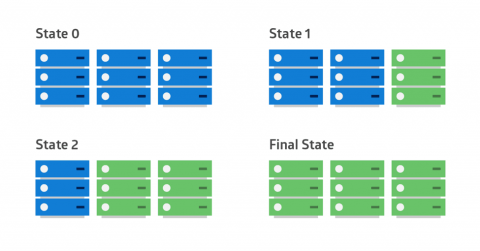
These days, the biggest change to software development is the frequency of deployments. Product teams deploy releases to production earlier (and more often). Months or years-long release cycles are becoming rare—especially among those building pure software products.
Research by Cybersecurity Ventures predicts ransomware alone will cost businesses around the world more than $11.5 billion in 2019. What’s worse, this same study also predicts businesses will experience a cyberattack every 14 seconds by 2019, up from once every 40 seconds in 2016. So what can you do to mitigate the increasing threat of cyberattacks? Here are five IT security best practices that can help.
We recently had a presentation at Activate 2018 about entity extraction in the context of a product search. For example: how to tell, when the user typed in Activate 2018, that the intent was to run conference:Activate AND date:201
Today we are releasing Grafana 5.3.3 and 4.6.5. These patch releases include an important security fix for all Grafana installations between 4.1.0 and 5.3.2. We also release 5.3.4 at the same time containing some fixes and improvements that we have been holding off for a while to release 5.3.3.
I had a wonderful time at IT Nation 2018 last week, getting to know many of you at the OnPage booth and during networking breaks. I also learned so much from the breakout sessions, not only from the knowledgeable speakers who shared ideas, best practices and experiences out in the field but also from the audience questions. Presentations are so much more valuable when there’s a lot of interaction!
Servers take a lot of requests daily, we know that…We also know that the server responds instantly. But who makes the request? What do they want, and what exactly are they looking for? Where do these visitors come from? How often they are making a request: once a month, once a day, almost every minute? Well, answers to these, and potentially a lot more questions, can be found in a single place - the server log file.