Operations | Monitoring | ITSM | DevOps | Cloud

Cybersecurity Myth Busting Ep. 21 | Security Insights Podcast

Ivanti finds, heals, and protects every device, everywhere – automatically. Whether your team is down the hall or spread around the globe, Ivanti makes it easy and secure for them to do what they do best. Ivanti is IT for the way we work now. Integrated solutions for everything IT touches. So, employees can work better, anywhere, and everywhere.

Stopping Agents and modules during a time interval

Learn how to create planned stops. Imagine that we are monitoring our resources, and we have to do a maintenance of an equipment that is being monitored, that equipment, or some of its services, will stop being operative and false alerts and events will be generated. To avoid this, there are the planned stops, a PandoraFMS system that allows us to deactivate the agents and modules that we select during a time interval, this way we will avoid receiving false alerts and events.

Here's what it feels like to deploy every day

Here's what it feels like to deploy every day. With Sleuth, Gigpro's software engineering team went from one deploy every two weeks to once a day. That made releases less stressful and helped improve team culture. Give Sleuth a try and see how we empower software teams to build faster by making engineering efficiency easy to improve and measurable — in a way that both managers and developers love.

What is Garbage Collection in Java: Detailed Guide

The Garbage Collection (GC) feature in the Java Virtual Machine (JVM) is truly remarkable. It automatically identifies and cleans up unused Java objects without burdening developers with manual allocation and deallocation of memory. As an SRE or Java Administrator you need a strong understanding of the Java Garbage Collection mechanism to ensure optimal performance and stability of your Java applications.

Demo Roundup: PagerDuty Operations Cloud for Kubernetes

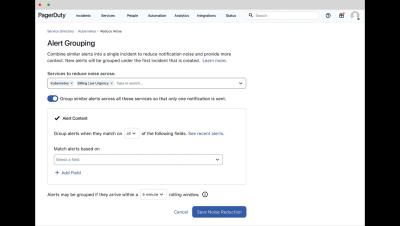
In this demo, Corbin Mills shows how to use the PagerDuty Operations Cloud to streamline and automate how a node failure is resolved. You’ll see how he uses event orchestration (in PagerDuty AIOps) to enrich an alert with pod names, and automatically runs a job to check the Kube API status, so that a responder has instant context. AIOps is also grouping and suppressing alerts. Then you’ll see how the responder can run more health status checks without the need to SSH into the environment or interrupt a co-worker for access.

3 Ways to Lower Costs and Improve Efficiency This Year and Every Year

The second half of 2023 is officially in full swing, and with that comes everyone’s favorite topic of conversation; end of year fiscal targets and annual budget reviews. For IT teams, the perennial ask will come down from above…. “we need to find $X, what can we cut, where can we find efficiencies and how much can your department save?”. You need to figure out how to save money and improve efficiency – and you don’t have much time to do it.

cert-manager can do SPIFFE? - Civo Navigate NA 2023

Ashley Davis, Senior Software Engineer and Maintainer of cert-manager, discusses the capabilities of cert-manager, an easy way to manage certificates in Kubernetes clusters. Ashley highlights the importance of Trust-manager for managing trust bundles, enabling clients to verify certificate legitimacy. Additionally, he explores the potential of using x509 certificates as a universal identity control plane in distributed systems through the concept of "SPIFFE" (Secure Production Identity Framework For Everyone).

Enhanced Ubuntu Experience on Azure: Introducing Ubuntu Pro Updates Awareness

In collaboration with Microsoft, Canonical introduces Ubuntu Pro update notifications into the Azure Update Management Center. This feature enables users to identify Ubuntu instances that aren't receiving all available security updates, including those delivered via Ubuntu Pro. Ubuntu Pro, a subscription by Canonical, provides enhanced security, maintenance, and compliance tools for organizations using Ubuntu on Azure.

Kubernetes Incident Management Best Practices

Creating just any infrastructure on Kubernetes is not enough. There are so many basic configurations you could apply and create the infrastructure for your application for the time being and it might work just fine. The incident responses won’t always remain 100% reliable. You will run into newer potholes, and that’s okay.