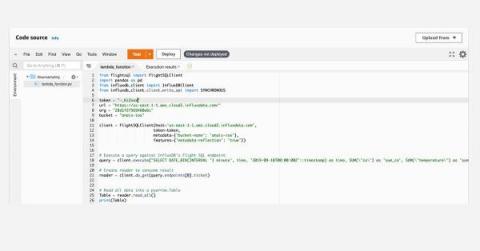
This tutorial covers how to perform downsampling with the new InfluxDB storage engine, InfluxDB IOx, in InfluxDB Cloud (available on AWS us-east-1 and AWS eu-central-1 starting January 31st) using AWS Lambda. This tutorial describes how to: InfluxDB IOx addresses key user needs including (but not limited to): We achieved these goals by building InfluxDB IOx on the Apache ecosystem (Apache Parquet, Apache DataFusion, Apache Arrow, and Apache Flight SQL).
When an organization signs up for Honeycomb at the Enterprise account level, part of their support package is an assigned Technical Customer Success Manager. As one of these TCSMs, part of my responsibilities is helping a central observability team develop a strategy to help their colleagues learn how to make use of the product.
Business operations have been revolutionized by the advent of web-computing services. Many organizations now look to decrease or eliminate expenditure, increase efficiency, and maximize profits by moving their processes online because of the unmatched flexibility and ability to scale the cloud affords them. With this sea-change to online, cloud-based operations for businesses has come a new challenge: availability.
MLOps (short for machine learning operations) is slowly evolving into an independent approach to the machine learning lifecycle that includes all steps – from data gathering to governance and monitoring. It will become a standard as artificial intelligence is moving towards becoming part of everyday business, rather than an innovative activity.
This post was written by guest author, Nahla Davies. Nahla has been in the software space since 2010 and a technical writer since 2019. She previously served as a lead programmer at an Inc. 5,000 experiential branding organization whose clients include Samsung, Time Warner, Netflix, and Sony. Microsoft Azure is widely popular among developers and across organizations because it’s scalable, flexible, and customizable.
Well-designed secrets management is a delicate balancing act between security and usability. Secrets must be easily accessible to the right users when building and deploying, but they must also at the same time be well-secured and easy to rotate. This article will cover how to thread this needle by integrating CircleCI with HashiCorp Vault and retrieving secrets using short-lived OpenID Connect (OIDC) authentication tokens.
Our latest open-source project, Helm-Dashboard, just crossed 3K stars on GitHub (and hundreds of daily active users), only three months since it was released! We thought this milestone was a good chance to take a look back at our journey, announce the release of v. 1.0.0, discuss future plans, and, most importantly, give our utmost thanks to the amazing contributors and Kommunity members that made it all possible! What capabilities would you like to see next in Helm-Dashbaord?
Incidents can be a bit noisy. Especially when it’s one of higher severity, there are a lot of moving parts that can make it difficult to come away with the information you want at a glance. And if you’re someone who isn’t necessarily tapped into the day-to-day of incident response, such as a head of a department or executive, you’ll want to be able to glean the most actionable information in just a few seconds without having to dig through dense documents.
Welcome to the DevSecOps and CI/CD security guide. Browse through each section to discover various relevant resources to ensure security of your applications and infrastructure.