Operations | Monitoring | ITSM | DevOps | Cloud

FlashDrive Startups Program

We give entrepreneurs from around the world the opportunity to build their projects with FlashDrive, and we're grateful to be able to give back to the startup community all the help we received when we launched FlashDrive not so long ago. FlashDrive Startups Program is a free program designed for startups at various stages that provides free computational credit and dedicated support to help startups quickly get started with FlashDrive's infrastructure, innovate, and grow rapidly.


Starting A Financial Services Agency - 5 Essential Tools & Resources

Starting a financial services agency has the potential to be a rewarding experience. The advancement of financial technology is rapidly transforming the sector. If you possess the skills to help individuals or organizations navigate the complexities of financial technology, your services could be providing clients with a tremendous amount of value. Financial services is a relatively broad term used to describe various offerings within the finance industry.

3 Ways to Improve Customer Experience and Help Your Business Grow

What is the fiercest area of competition among businesses today? It’s not just acquiring new customers, but instead, customer experience has become the most competitive area that can make or break any company’s success. Customer experience includes both customer service and customer engagement, so this category encompasses a broad field of factors to attend to.

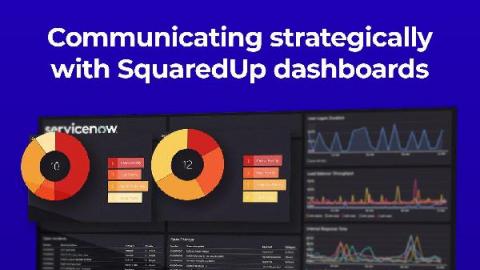
Communicating Strategically with Manual Reporting Availability (Part 3)

In my prior two blog posts, we focused on creating a bunch of Enterprise Applications (EAs), tagging those EAs, and then updating the Status dashboard to only show those EAs that are Critical Service Offerings (CSO). For this blog post, we will create some relationships and demonstrate how alerting behaves using SquaredUp's Manual Reporting Availability functionality available in the EAM tier of the product. For this post, we're going to do amazing stuff!

Using HAProxy as an API Gateway, Part 4 [Metrics]

HAProxy publishes more than 100 metrics about the traffic flowing through it. When you use HAProxy as an API gateway, these give you insight into how clients are accessing your APIs. Several metrics come to mind as particularly useful, since they can help you determine whether you’re meeting your service-level objectives and can detect issues with your services early on. Let’s discuss several that might come in handy.

How to get the most from your ITSM monitoring integrations?

Before talking about integration, let’s take a look at your non-automated Service Management processes. There isn’t a right or wrong answer as this varies based on your needs, think through the below questions to get a perspective on how tasks flow within your company today.

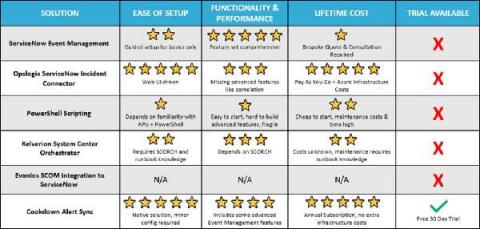
How can I convert SCOM alerts into actionable ServiceNow Incidents?

Firstly, let’s look at why it is so valuable to integrate SCOM and ServiceNow. There are lots of tools available to help you integrate SCOM and ServiceNow. So, the next step is to understand which one will provide your business with the best solution. To help you work through this decision we recommend you ask yourself the following questions.

A quick guide to reputational risk

When it comes to reputational risk, a reactive approach is generally taken by organizations, with efforts focused on handling threats to their business they are already aware of. As much as this enables short term damage limitation, it may not be enough to manage and protect your risk in the long term. Instead, a more proactive approach is key to success.

Martello iQ and Azure Monitor, How Do the Two Products Compare?

Microsoft Monitoring health and usage information is a critical maintenance task for any site or application, whether it’s running in your on-premises datacenter, hybrid or public cloud environment, or hosted environment. Today’s challenge is that enterprises still require end-to-end monitoring insights of their running (and not running) application workloads, while also knowing that they are losing ground on the physical characteristics of managing their own datacenters.