Want to contribute to the community by sharing your own tutorials? Just head over to https://ubuntu.com/tutorials
Zac Propersi, Engineering Manager at Sentry, can tell when a page is not loading as fast as it should — just by looking at it. While working on our new Metric Alerts feature, Zac noticed that the alerts pages were rendering slowly. Being the super Sentry user that he is, he wrote a custom query in Discover to see just how slow the transactions were.
It’s no secret that AWS Lambda adoption has grown steadily since AWS first released it in 2015—and for good reason. The benefits of adopting Lambda are many: leveraging Lambda eliminates the need to provision and manage servers, enabling teams to just focus on their code without the mental and operational overhead of worrying about the underlying infrastructure.
Errors are undesirable for users and you should do everything in your control to keep users away from them. However, they are of utmost importance for developers. They allow developers to understand the inaccuracies and vulnerabilities in their code by alerting them when their code breaks. They also provide relevant information about what went wrong, where, and what can be done to make amends.
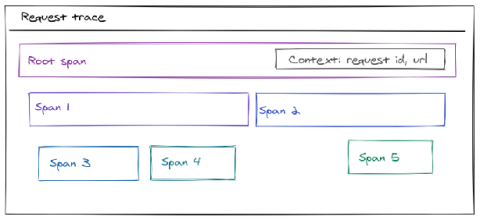
Large-scale cloud applications are usually built using interconnected services that can be rather hard to troubleshoot. When a service is scaled, simple logging doesn’t cut it anymore and a more in-depth view into system’s flow is required. That’s where distributed tracing comes into play; it allows developers and SREs to get a detailed view of a request as it travels through the system of services.