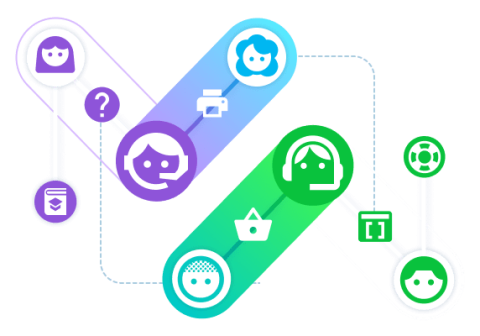
A help desk is a group, department, or external service that users contact for assistance through various channels.
Observability tools have traditionally focused on capturing and analyzing log data to improve application performance monitoring and security. Data observability turns the focus back on the data to improve data quality, tune data infrastructure and identify problems in data engineering pipelines and processes. “Data analysts and business users are the primary consumers of this data,” said Steven Zhang, director of engineering at Hippo Insurance.
Welcome back! In the previous blog, we discussed with our panelists Carlos Casanova, Forrester principal analyst, and Gowrisankar Chinnayan, who heads product management at ManageEngine, why organizations should adopt AIOps, and the challenges they face. Let’s start by acknowledging the increasing interest in AI. More enterprises are adopting AI-based solutions as they discover how AI can help manage IT operations.
When it comes to creating new Pods from a ReplicationController or ReplicaSet, ServiceAccounts for namespaces, or even new EndPoints for a Service, kube-controller-manager is the one responsible for carrying out these tasks. Monitoring the Kubernetes controller manager is fundamental to ensure the proper operation of your Kubernetes cluster. If you are in your cloud-native journey, running your workloads on top of Kubernetes, don’t miss the kube-controller-manager observability.