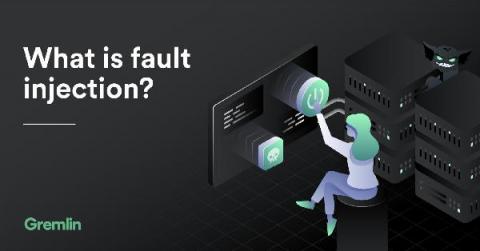
When reading about Chaos Engineering, you’ll likely hear the terms “fault injection” or “failure injection.” As the name suggests, fault injection is a technique for deliberately introducing stress or failure into a system in order to see how the system responds. But what exactly does this mean, and how does this relate to Chaos Engineering?
As our customers scale and utilize Coralogix for more teams and use cases, we decided to make their lives easier and allow them to set up their Coralogix account using declarative, infrastructure-as-code techniques. In addition to setting up Log Parsing Rules and Alerts through the Coralogix user interface and REST API, Coralogix users are now able to use modern, cloud-native infrastructure provisioning platforms.
Maintaining product focus is the best way to guarantee a successful business. As the late great Steve Jobs put it: “if you keep an eye on the profits, you’re going to skimp on the product… but if you focus on making really great products, the profits will follow.” There are a wide variety of statistics available on how much time developers actually spend writing code, anywhere from 25% to 32%.
A decade ago, DevOps teams were slow, lumbering behemoths with little automation and lots of manual review processes. As explained in the 2020 State of DevOps Report, new software releases were rare but required all hands on deck. Now, DevOps teams embrace Agile workflows and automation. They release often, with relatively few changes. High-quality DevOps change management is no longer a nice-to-have, it’s a must. For a lot of DevOps teams, this is easier said than done.
Introduced in 1991, Python has grown to become a versatile and reliable programming language for modern computing requirements. Python is a powerful language used in web development, data science, software prototype creation, and much more. One of the best qualities of this language is it’s easy to learn and uniform across many use-cases.