Operations | Monitoring | ITSM | DevOps | Cloud

Pandora FMS SNMP trap monitoring

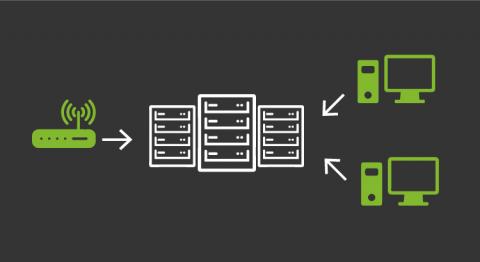
As network technology evolves, the SNMP world evolves with it. They create new network hardware that contains more and more OIDs to be able to stay updated on the status of more details of the product. This entails the need to automate the way to control every detail, doing it through the use of SNMP trap monitoring. An SNMP trap is a message sent by an SNMP device to a configurable IP address when there’s a change or an event on the device.


Slow and steady: How to build custom grok patterns incrementally

In our blog post on structuring Elasticsearch data with grok on ingest for faster analytics, we took a look at how to structure unstructured data on ingest (schema on write) to make sure your analytics run at near real time. Speed like that can help take your observability use cases to the next level. In this article, we’re going to build on what we learned by incrementally creating a new grok pattern from scratch!

How Value Stream Management Uses Observability to Optimize Flow

This is the second in a three-post series themed around Ops-led DevOps, where I explore the relationship between observability and a set of software delivery lifecycle practices that support the adoption of DevOps principles and the transition from project to product centric ways of working. I started with Site Reliability Engineering, here I consider Value Stream Management (VSM) and I will finish with Continuous Delivery. Defining VSM Forrester defines VSM as.

Hybrid Visibility, Automation Accelerate Digital Transformation at Epsilon

Epsilon, an OpsRamp customer and leader in outcome-based marketing, delivers marketing technology, solutions and services to name-brand clients such as Coach, Walgreens, Dunkin’ Donuts, and Dell/EMC. Acquired in 2019 by Publicis Groupe, Epsilon was recently ranked as a leader in its sector by Forrester. Success though, is a game with no end, and the company has been modernizing its legacy IT infrastructure in the last several years to remain competitive.

KubeCon Europe 2020 Wrapup

KubeCon + CloudNativeCon Europe 2020 Virtual happened online, August 18-20. It was the first virtual KubeCon, due to the coronavirus pandemic. I was happy to attend, although this was the second straight virtual conference I’ve participated in that ran on Amsterdam time. I did make it up for the 4 AM Pacific time start, though, and I was ready to go. As I got settled in, in front of my laptop, I knew I would be missing the hallway track a lot.

The Top 6 Benefits of Web Hosting for Your Business

Website hosting is growing in popularity with businesses of all sizes. Instead of having to maintain your in-house web server, you pay a monthly subscription to someone else to host the website for you on their server. There are several benefits of web hosting for your business when using a hosting provider.

How IT professionals can close the cloud security gap in multi-cloud environments

In the midst of the COVID-19 pandemic, many businesses have faced uncertainty regarding the future. While some companies had to close down temporarily, others were able to move toward a remote workforce. By mid-April of 2020, the number of employed adults saying they began working remotely peaked at 62%. While this number will inevitably go down once the pandemic passes, it certainly seems like remote work has become more commonplace.

Monitoring Your Data with the Mosaic Graph Type

InfluxDB provides several graph type visualizations to allow users to easily monitor their data. However, most of those graph types are only helpful if your data can be represented numerically. What if you want to track the health of your application, or visualize the status of your pods deployed in Kubernetes, over time? In both these cases, status is tracked over time using one of several discrete values, and can’t be plotted on an x/y chart.

Do you KYC?

Compliance has often been a checkbox exercise, primarily seen as a defensive strategy in preventing financial penalties and PR embarrassments. However, some organizations have taken a different approach. They’ve used compliance on the offensive - to give a competitive edge, turning “compliance teams” into “innovation teams”. These companies have improved processes and increased customer experience. They’ve installed an elevator instead of fixing the ladder.