Honeycomb strives to be a fast, efficient tool; our storage back-end satisfies the median customer query in 250ms (and the P90 in 1.3 seconds). Still, every system has its limits, and customers with large datasets know that querying over a long time range, grouping by high-cardinality columns, building complex derived columns, and throwing a quantile or heat map into the mix can lead to some pretty slow queries. If this sounds familiar: good news!
You've got this month’s salary, and now it is time for shopping! You’re surfing in the Amazon, here are the earphones that you wanted to buy for a long time. You added it to cart. What a coincidence! There is a discount option with a coupon for this product. This must have made you happy as everyone loves discounts!
Knowing what is going on with your web assets 24/7 is key to delivering a performant site with high availability. That is why Uptrends gives you so many options for getting the information out to the right people when they need it.
The health of a domain reflects current server status and other details like email servers and DNS records. Today, we’ll do a deep dive into the Domain Health Check and point out potential uses.
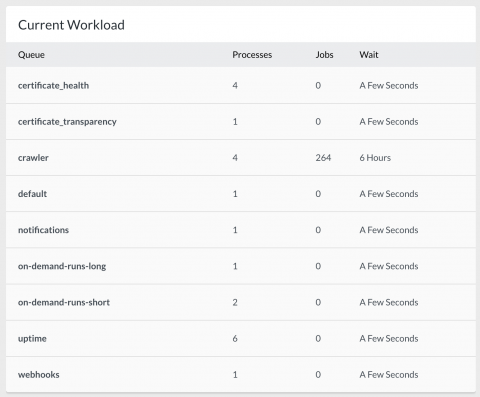
Laravel offers a convenient way to create asynchronous background tasks using its queues. We utilize those heavily at Oh Dear! for all our monitoring jobs and in this post we'll share some of our lessons learned and what we consider to be best practices.
Now that we’re all saving money on our Azure bills, it’s time to backup those Azure VM disks. Skeddly now supports the creation and deletion of Azure disk snapshots with our two new actions: Backup Virtual Machines, Delete Disk Snapshots. Both of these actions work like their AWS counterparts.
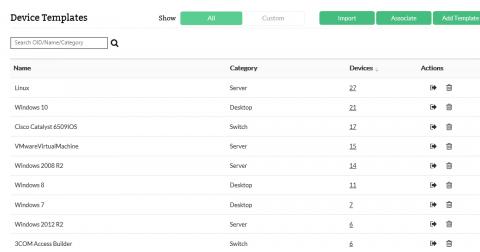
Just last month we heard flattering statements about OpManager’s UX, and nothing makes us happier than knowing that our continuous improvements have positively impacted our users. We’re always eager to meet your growing IT infrastructure needs, so we’re happy to introduce a set of 4,000 new device templates. That doubles the number of OpManager device templates to over 8,000, helping you in your goal of comprehensive network management.