Operations | Monitoring | ITSM | DevOps | Cloud

Honeycomb Differentiators Series: SLOs That Tell the Whole Story

In the recent past, most engineering teams had a vague notion of what Service Level Agreements (SLAs) and Service Level Objectives (SLOs) were—mainly things that their more business-focused colleagues talked about at length during contract negotiations. The success or failure of SLAs were tallied via magic calculations (what is “available” anyway?!) at the end of the month or quarter, and adjustments were made in the form of credits or celebrations in the break room.

Monthly Moo Update | October 2021

There’s a number of monitoring and observability solutions on the market today. It almost reminds me of the automobile market and the endless number of automobiles available. Sure, they all get you from point A to point B, in some way. But some automobiles do it faster, smoother, more efficiently, with guidance, more comfort, storage space, perhaps towing capability, and even autonomously. Moogsoft is the automobile you’ve been dreaming about in the monitoring and observability market.

Mastering AWS identity and access management

From the basic to advanced concepts of AWS own service for identity and access management: users, groups, permissions for resources and much more. For seriously working with AWS, there’s no way around its Identity and Access Management (IAM) service. Skipping to understand its core principles will bite you again and again in the future️. Take the time to do a deep dive, so you won’t be frustrated later.

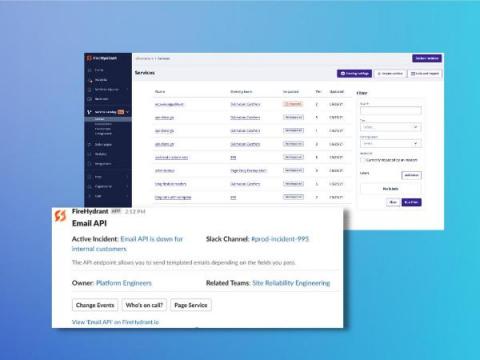
FireHydrant expands Reliability Platform with Service Catalog

Today, we are happy to announce the launch of Service Catalog to help you better manage, query, and learn about the services that exist in your infrastructure. At FireHydrant, we envision a world where all software is reliable, and we’re on a mission to help every company that builds or operates software get closer to 100% reliability. Service Catalog helps you get closer to 100% reliability.

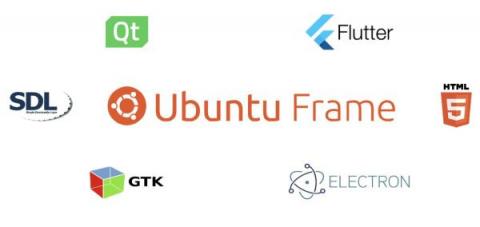
Canonical launches Ubuntu Frame, the foundation for embedded displays

Canonical’s Ubuntu Frame is an easy-to-use, reliable and secure fullscreen shell to power edge devices, with 10 years of support from Canonical. October 6th, 2021: Canonical announces the release of Ubuntu Frame, a solution that allows developers to easily build and deploy graphical applications for interactive kiosks, digital signage solutions, or any other products that require a graphical output.

What is a Site Reliability Engineer (SRE)?

A site reliability engineer, or SRE, is a role that that encompasses aspects of both software engineering and operations/infrastructure. It also encompasses a strategy and set of practices and principles across service offerings and is closely tied to DevOps and operations. The term site reliability engineering first came into existence at Google in 2003 when a site reliability team was created. At that time, the team was made up of software engineers.

Stop coding, start clicking with 2 Steps - Customer Testimonial Edenor

Spending too much time coding or embedding agents for your monitoring? With agentless synthetic monitoring from 2 Steps, Anyone can build tests. Realise the value of 2 Steps quickly with no agents, no code, no worries. “We were amazed by getting value from 2 Steps so rapidly. The implementation was fast and it was easy to use without any previous expertise in building user transactions.” Alejandro Marzullo Systems Analyst Edenor

Execution management meets digital workflows

The longer the pandemic stretches on, the more convinced I become that innovation is the key to recovery. And I’m not alone. McKinsey research found more than 90% of executives “expect the fallout from COVID-19 to fundamentally change the way they do business over the next five years.” Yet, many organizations are focusing less on innovation in an effort to minimize risk, save money, pursue safe opportunities, and bolster their core business, McKinsey reports.