If you've ever had to be on the receiving end of a monitoring system that uses email for alerts, you know how noisy things can get. Particularly if you're working in an agency or freelance-like environment, with dozens of client sites to maintain. You get so many emails that you start looking into integrations with third-party services like Zapier, and coming up with more and more complex rules to try reduce the noise.
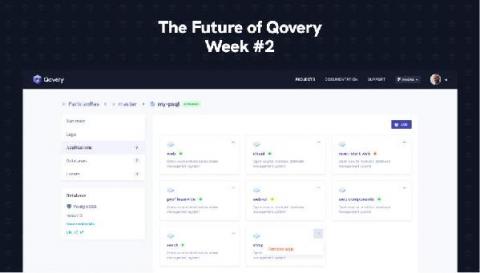
During the next nine weeks, our team will work to improve the overall experience of Qovery. We gathered all your feedback (thank you to our wonderful community 🙏), and we decided to make significant changes to make Qovery a better place to deploy and manage your apps. This series will reveal all the changes and features you will get in the next major release of Qovery. Let's go!
When DevOps teams talk about monitoring a database, the primary motivation is to ensure that the database won’t suffer a performance hiccup. Long queries, timeouts and table scans are among the most popular causes behind lousy customer experience. However, in recent years, more data has been shifted to cloud databases.
In an expanded and commercial industry space new and innovative opportunities are presented to retail organizations from several novel sources of data, log files, and from transaction information to sensor data to achieve unmatched value and combative advantage in their respective fields. In order to attain customer satisfaction and to flourish their business, people across the organization must be empowered, so that swift and accurate decisions can be attained.
Five worthy reads is a regular column on five noteworthy items we discovered while researching trending and timeless topics. In this week’s edition, let’s explore how quantum computing works and how it impacts cybersecurity.
Troubleshooting issues in your applications can be a complicated task requiring visibility into various components. In the worst-case scenario, to understand what is happening and why it is happening you will need metrics, logs, and traces combined together. Having that information will give you the possibility to slice and dice the data and get to the root cause efficiently. In this article, we will focus on logs and how to configure logging for your Java applications.
In our previous blog post, Using HAProxy as an API Gateway, Part 2 [Authentication], you learned that when you operate HAProxy as an API gateway, you can restrict access to your APIs to only clients that present a valid OAuth 2 access token. In this post, we take it a step further. You will learn how to leverage tokens to grant some users more access than others and then charge for the service.
Until recently, work has been thought of as a place you go, rather than a thing you do. While cloud technology has made a ‘digital workplace’ possible, for many businesses, this has been a long-term ambition. But what happens when this changes overnight? Suddenly more people are at home than in the office, and the typical 9-5 model doesn’t apply anymore. This is the reality that businesses the world over had to face head-on a year ago when the pandemic hit.