

Operations | Monitoring | ITSM | DevOps | Cloud

Landing on the Moon with Grafana and Thermal Engineering | Grafana Everywhere

In honor of World Space Week, we're spotlighting Jackson Sweeney's story and his role in Blue Ghost Mission 1. As a Thermal Engineer at Firefly Aerospace, he used Grafana to ensure that the spacecraft maintained the right temperature throughout the mission... and receive a Golden Grot Award for his use case. Behind every successful moonshot are people solving one hard problem after another. For engineers like Jackson, that means turning an extraordinary ambition into thousands of practical decisions.

Fixing 3 issues with one distributed trace

Use Sentry tracing to investigate three different problems in one shopping flow: an N+1 query, an expired promo-code warning, and a checkout exception. The entire shopping flow happens through the agent conversation on Empower Plant’s homepage: a search for plants under $200, adding one of each to the cart, starting checkout, applying SAVE20, then attempting to place the order. The trace connects that flow to repeated database queries and an N+1 issue, a warning that SAVE20 has expired, and a checkout exception with its inventory-validation stack trace.

10 Best AI Logging Tools in 2026: Features, Pricing & Comparison

As businesses increasingly integrate artificial intelligence into their applications and workflows, understanding what happens behind the scenes of these AI systems has become essential. AI-powered chatbots, large language models (LLMs), and autonomous AI agents can process thousands of requests, interact with external applications, and execute complex tasks. However, when something goes wrong, identifying the source of the problem isn’t always straightforward. Was the AI response incorrect?

8 Best AI SRE Tools in 2026 for Incident Investigation and Reliability

The best AI SRE tools to evaluate in 2026 include Sherlocks AI, Resolve AI, Traversal, Cleric, Rootly AI SRE, Komodor Klaudia, Datadog Bits Investigation, and Dynatrace Intelligence. Each addresses a different part of reliability work, from investigating alerts across multiple systems to diagnosing Kubernetes failures or validating production changes. Choosing the right tool starts with a practical question: where does your team lose time during an incident?

How a Solutions Architect Brought Multi-Cloud Migration to OpenSearch | Tony Piazza

Aiven Senior Solutions Architect Tony Piazza joined the company in March. Within months he had merged five PRs adding Google Cloud support and Terraform-based provisioning to the OpenSearch Migration Assistant, a tool that previously only worked on AWS. Tony talks with Jay Miller about: Why he went from consulting to open source contribution. How a consultant’s habit of finding project risks early shaped the work. His first conference keynote at OpenSearchCon. What contributing as a vendor-neutral company looks like. Where he’s contributing next, including ML Commons, Data Prepper and the docs.

Unify data across Datadog BYOC with cross-cluster queries for teams and AI agents

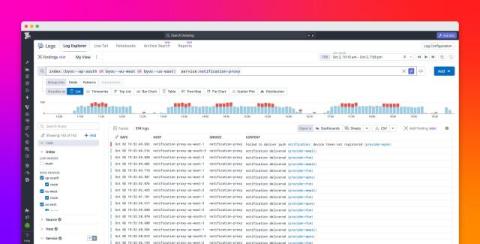
Organizations may need to keep data in specific regions or infrastructure they control, whether because of data residency requirements, internal policies, or transfer costs. Datadog Bring Your Own Cloud (BYOC) extends the Datadog platform into those environments. Each BYOC deployment runs as a Kubernetes cluster with its own object storage, keeping data close to its source.

Building Reliable IT Infrastructures

Downtime is expensive, and it’s getting harder to avoid. Every year, enterprise IT environments grow more distributed, dynamic, and difficult to maintain with legacy tools and manual processes. With unplanned outages costing enterprises nearly $25,000 per minute, establishing and maintaining a resilient IT infrastructure is essential. Enterprises have already invested heavily in resilient architecture.

What Is High Availability? How It Works and How Many Nines You Actually Need

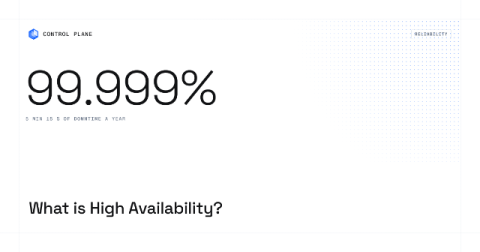
High availability (HA) is a system’s ability to keep serving users when individual components fail, from a single server up to a whole cloud region or provider. It is measured in nines: 99.9% allows about 8 hours 46 minutes of downtime a year, 99.99% about 52 minutes, and 99.999% about 5 minutes 15 seconds. HA works by removing single points of failure through redundancy, health checks, automatic failover, and replicated data.