Operations | Monitoring | ITSM | DevOps | Cloud

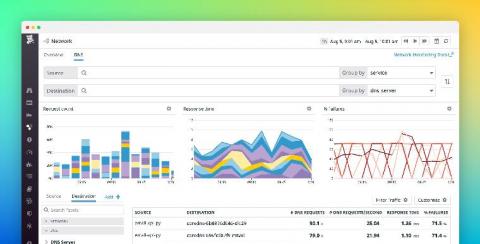
Monitor DNS with Datadog

DNS is a critical component of your infrastructure, enabling your services to reach the endpoints they rely on and connecting your users to your web applications from anywhere in the world. In order to keep your DNS healthy and performant, you need complete visibility into both internal and external DNS resolution. Datadog is excited to announce new DNS monitoring features that help you troubleshoot DNS end-to-end, so you can ensure your applications’ performance and availability.

JFrog Xray Quick Scan Guide

JFrog Xray is a Software Composition Analysis tool (SCA) which is tightly integrated with JFrog Artifactory to ensure security and compliance governance for the organization binaries throughout the SDLC. This video will take you through configuring your JFrog Platform instance to start displaying security and license information about the artifacts in your JFrog Artifactory as fast as possible.

Why You Should Monitor Your AWS Infrastructure

share post Amazon Web Services (AWS) is almost ubiquitous with the terms “cloud computing” to many. With over 175 services, it is easy to understand why the growth and branding are strong. Here’s a fun game: Which of these is NOT the name of an AWS Service offering: They all are. It is likely you may have heard of many of these, but not all. It is less likely you can give a two-sentence brief on each of them or know what they do. Cloud computing often runs into a problem of scale.

Investigating Performance Regressions with Trends

To us, dogfooding means using Sentry to improve Sentry. Here in this article, you’ll see how we used Performance to improve our search infrastructure. Recently, we extended our performance monitoring solution support to PHP and Serverless. We’re bringing it to Ruby and Java + Springboot soon too. But as some of you may have noticed, there’s also a new view in Performance, Trends. Trends shows you the most improved and regressed transactions in relation to releases.

Getting Started with Web Vitals

To improve front-end performance in your application, it’s important to understand what kind of problems users are experiencing. They may be encountering slow load times, seeing unexpected shifts, or having trouble interacting with UI components. The question is, how bad is it? Is it perpetual-rage-click bad? Is it ditch-your-app bad? Is it rant-on-Twitter bad?

Key Network Monitoring Challenges Every Remote Team Faces

Remote teams are not a new concept. Several organizations have been outsourcing development and support tasks to nearshore and offshore bases for more than a decade. And remote working is gradually increasing given the benefits it gives, like high productivity levels, lower costs, and access to a global talent pool. With the recent COVID-19 outbreak, virtual teams and remote working have truly become mainstream and are being embraced by both employers and employees alike.

How to monitor Kubernetes control plane

The control plane is the brain and heart of Kubernetes. All of its components are key to the proper working and efficiency of the cluster. Monitor Kubernetes control plane is just as important as monitoring the status of the nodes or the applications running inside. It may be even more important, because an issue with the control plane will affect all of the applications and cause potential outages.

Maximize Monitoring in Rancher 2.5 with Prometheus

We dedicate a lot of space in our blog to the topic of monitoring. That’s because when you’re managing Kubernetes clusters, things can change quickly. It’s important that you have tools to monitor the health and resource metrics of your clusters. In Rancher 2.5, we introduced a new version of our monitoring based on the Prometheus Operator, which provides Kubernetes-native deployment and management of Prometheus and related monitoring components.