AWS Auto Scaling groups are a powerful tool for creating scaling plans for your application. They let you dynamically create a group of EC2 instances that will maintain a consistent and predictable level of service. HAProxy’s Data Plane API adds a cloud-native method known as Service Discovery to add or remove these instances within a backend in your proxy as scaling events occur. In this article, we’ll take a look at the steps used to integrate this functionality into your workflow.
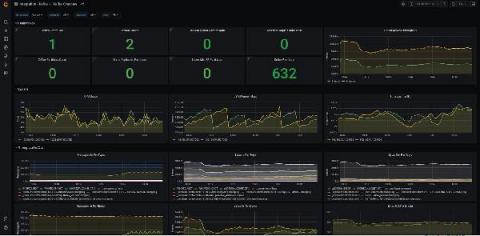
We are happy to announce that the Kafka integration is available for Grafana Cloud, our composable observability platform bringing together metrics, logs, and traces with Grafana. Apache Kafka is an open source distributed event streaming platform that provides high-performance data pipelines, streaming analytics, data integration, and mission-critical applications.
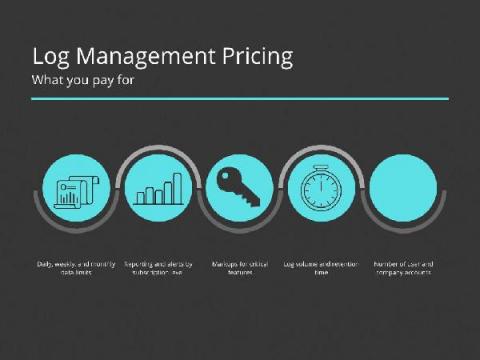
Purchase decisions often begin with a price check. Log management is no different. Evaluate your budget and narrow down the options that fit to choose the tool that gives you the most for what you pay. As always, cheaper is better as long as the platform doesn’t cut any corners. But with log management, there is a catch – not all tools are transparent with their pricing model.
This series was co-written by Musa Barighzaai and Tyler Sullberg. In the previous post, we explored high-level differences between thinking in Clojure compared to thinking in JavaScript. We are now ready to start building our first Clojure microservice. The microservice we are going to build will be very simple. It will be an HTTP server that uses a Redis data store to count how many times a given IP address has pinged the /counter endpoint.
This series was co-written by Tyler Sullberg and Musa Barighzaai. This is the third and final post in a series of posts for JavaScript developers about how to set up Clojure microservices. The previous posts were: Those previous posts are useful context, but you can clone the repo and jump into this post without reading them.