Operations | Monitoring | ITSM | DevOps | Cloud




New Milestone for Freshworks
“Winning doesn’t always mean being first. Winning means you’re doing better than you’ve ever done before” – Bonnie Blair, five-time Olympic gold medalist. By that definition, Freshworks is a clear winner. Recording a personal best, Freshworks has been positioned on the Challengers quadrant in the 2021 Gartner Magic Quadrant for ITSM Tools.

An Inside Look at the Exoprise Sales Team with Mark Yohai, VP Sales & Business Development

Exoprise CxO Briefing with Jason Lieblich, Founder and President

Adopt the "Beyonce Rule" for Scalable Impact
Recently, I started to read the invaluable book Software Engineering at Google. It’s a great book by Google, describing their engineering practices across many different domains. One of the first chapters discusses the matter of making a “scalable impact,” which I find very interesting, and something that I believe has been overlooked by many organizations.
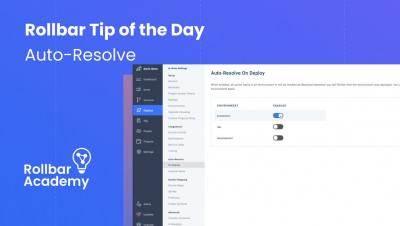
Rollbar Tip of the Day: Auto-Resolve

Publishing to Rubygems with CircleCI
If you maintain a Ruby gem, you are definitely familiar with the recurring manual tasks surrounding the release of a new version. After doing this for a while, you inevitably start thinking that some of these steps could be automated. They can! With a few lines of code, you can bring the amazing world of continuous delivery to your project and increase the reliability of the whole process while freeing up some of your time. Double win!
Cloud 66 Prepress: Build & deploy any Jamstack site on your own cloud
Announcing Cloud 66 Prepress
Today we are releasing a completely new product: Cloud 66 Prepress. Prepress is a DevOps product for pre-rendered web applications - particularly those built around Jamstack architecture. We announced Cloud 66 for Rails in 2013. Our Rails product helps developers deploy Rails applications to any cloud with a Heroku-like experience. Today, tens of thousands of developers worldwide use our products to deploy their applications to any cloud.