Operations | Monitoring | ITSM | DevOps | Cloud

The Place Where Modern Operations & Technology Come Together




The Top 15 New Relic Dashboard Examples
Among the arsenal of tools available for monitoring and managing an organisation’s mission critical applications and service, New Relic is a popular choice for many users. In our article, we will delve into the world of New Relic Dashboards, shedding light on the best use cases that demonstrate their visualisation capabilities.
How To Maximize Free Cloud Resources Without Overstepping
Navigating the cloud computing landscape often involves a delicate balancing act between leveraging available resources and managing costs. Amazon Web Services (AWS), a leader in cloud services, offers an enticing proposition through its Free Tier, especially with services like Amazon EC2 and RDS. These offerings present a unique opportunity for IT professionals to push the boundaries of cloud computing, but they also pose the challenges of staying within budgetary constraints.
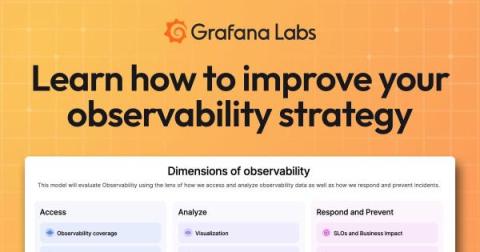
How to improve your observability strategy: Introducing the Observability Journey Maturity Model
While many segments of the IT market move quickly, the observability space seems to move at lightning speed. Fueled by open source innovation, observability toolsets and best practices constantly evolve. Sometimes, it can be tough to keep up — and even tougher to know where your own observability strategy stands. That’s the exact challenge we aim to address with our new Observability Journey Maturity Model.

Pandas Time Series: A Primer
Time series data is a fundamental part of numerous real-world applications, from stock market analysis to weather forecasting to financial market forecasting. Effectively managing, analyzing, and visualizing time series data is essential for extracting meaningful insights and making informed decisions. This is where pandas time series comes into play. It can help you organize, transform, and visualize data and examine details for a specific time period.

How to read InfluxDB 3.0 Query Plans
This blog post explains how to read a query plan in InfluxDB 3.0 and requires basic knowledge of InfluxDB 3.0 System Architecture. InfluxDB 3.0 supports two query languages: SQL and InfluxQL. The database executes a query written in either SQL or InfluxQL according to the instructions of a query plan.

Announcing the Mattermost Trustcenter
Our mission is to make the world safer and more productive by developing and delivering secure, open source collaboration software. And that mission starts with ensuring that our customers can make informed decisions about their software choices. That’s why we’re excited to introduce the Mattermost Trustcenter.
The Debrief: Why we killed our Slackbot and bought incident.io with Michael Cullum of Bud Financial
For financial services companies, good incident management is absolutely critical—maybe more so than in other industries. So, for Michael Cullum and his team at Bud Financial, the choice to build an incident response tool felt right for them in the moment. But very quickly, Michael and the team came face-to-face with the myriad limitations that come with building your own response tooling.

What to expect from Civo in 2024: GPUs, Navigate, and ML
From the announcement of our first tech event, Civo Navigate, to building a machine learning landscape, 2023 has been an incredible year for Civo. Last year enabled us to shift our focus towards community engagement, product enhancements, and sustainability, allowing us to foster a more robust, inclusive, and environmentally conscious technology ecosystem. Let’s take a look back at the incredible work the team has been working on over the past year and what we can expect to see in 2024.