Operations | Monitoring | ITSM | DevOps | Cloud

Error Monitoring - The Necessary Application Feature

To err is human. The process of software development can’t be error-free; fixing errors is part and parcel of building software applications. And, no matter how much you dislike those harsh error messages when your code fails and exits, you have to admit that they save you from a lot worse.

Sponsored Post

Data Observability With Robotic Data Automation Fabric

Digital-first businesses are striving for service assurance, which has become the lifeblood for their businesses processes. But they are increasingly getting complex across legacy and cloud-native applications, multi-cloud distributed services, with the rise of edge and when leveraged with Kubernetes and microservices architectures. Service assurance needs full-stack observability; however, customers need an approach to tame the data deluge while enabling actionable insights.

A CFO's Guide To Evaluating Cloud Spend

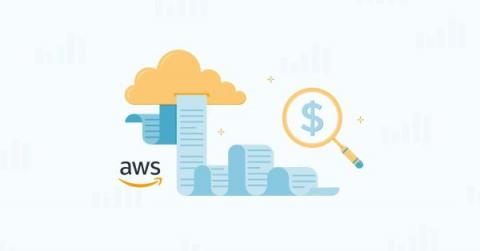
We have a term we like to use when we meet CFOs who have just gotten their biggest AWS bill ever: bill shock. Bill shock is when finance suddenly rings the alarm that the bill is “too high” and gets everyone scrambling to explain what they’re spending money on. It often happens when the bill reaches a new milestone (the first million, ten million, or hundred million) or growth trajectory (it doubled in a quarter!?). The problem with bill shock is that it can be highly disruptive.

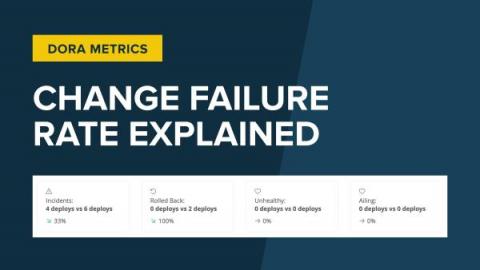
Change Failure Rate explained

This post is the third in a series of deeper dive articles discussing DORA metrics. In previous articles, we looked at: The third metric we’ll examine, Change Failure Rate, is a lagging indicator that helps teams and organizations understand the quality of software that has been shipped, providing guidance on what the team can do to improve in the future.

What the Pivot() is Going On with the MQTT Plugin?

The MQTT Consumer Plugin is one of our most widely used input plugins for Telegraf. If you need a little bit of background, then I highly recommend checking out the following: I plan to release an MQTT best practices blog soon, but we thought this plugin partnership was too good not to talk about now.

Insurance Provider Reduces Software Licensing Costs, Saving Millions

A large U.S.-based insurance provider was experiencing rising database software licensing costs. In order to reduce the software licensing costs, the organization needed to complete a comprehensive infrastructure analysis of over 200 physical servers. 75 percent of these physical servers supported one software application, their database solution. Additionally, the software routinely only utilized between two and four cores, despite having 24 cores on each server.

PostgreSQL Logging Configuration Explained: How to Enable Database Logs

PostgreSQL is an open-source relational database management system that’s been utilized in continuous development and production for 30 years now. Nearly all the big tech companies use PostgreSQL, as it is one of the most reliable, battle-tested relational database systems today. PostgreSQL is a critical point in your infrastructure, as it stores all of your data. This makes visibility mandatory, which in turn means you have to understand how logging works in PostgreSQL.

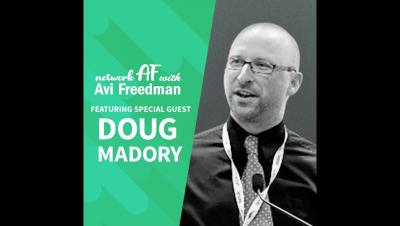
Internet traffic and current events with Doug Madory | Network AF Episode 19

Network AF welcomes Doug Madory back to the podcast to discuss current events, including Russia invading Ukraine, and recent internet-related issues in Syria and Egypt. Doug is Kentik's Director of Internet Analysis, and uses BGP and traffic data to write about happenings with networks on a worldwide scale. Together with Kentik CEO and show host Avi Freedman, the two dive into the real-world implication of geopolitical events on the state of networking.