Operations | Monitoring | ITSM | DevOps | Cloud

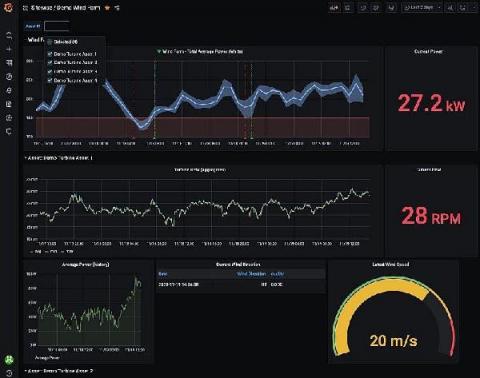
With the new AWS IoT SiteWise plugin, you can visualize and monitor your equipment data in Grafana dashboards

In collaboration with the AWS team, we have just launched another AWS integration, the AWS IoT SiteWise plugin for Grafana. AWS IoT SiteWise is a managed service that helps users collect, store, organize, and monitor data from industrial equipment, across facilities, at scale.

What the Google Outage Can Teach Us About Our Own Services

This week, the world stopped for a few hours as Google users experienced an outage on a massive scale. The outage affected ALL services which require Google account authentication. This includes the Google Cloud Platform (Cloud Console, Cloud Storage, BigQuery, etc.), Google Workspace (Gmail, Calendar, Docs, Drive, etc.) and Google Classroom. With the myriad of affected platforms, this particular outage was far from passing by unnoticed by users.

Manual steps in parallel groups available for Pipelines

Bitbucket Pipelines now allows steps with a manual trigger to be used in parallel groups, satisfying one of the highest voted feature requests. This feature provides more flexibility in Pipelines, allowing teams to configure pipelines with multiple options and then only run the steps they actually need to run, at the time they want. For example you can choose which environments should be deployed for individual developers, giving them different environments to test and do their work.

Announcing Harvester: Open Source Hyperconverged Infrastructure (HCI) Software

Today, I am excited to announce project Harvester, open source hyperconverged infrastructure (HCI) software built using Kubernetes. Harvester provides fully integrated virtualization and storage capabilities on bare-metal servers. No Kubernetes knowledge is required to use Harvester. In the past few years, we’ve seen many attempts to bring VM management into container platforms, including our own RancherVM, and other solutions like KubeVirt and Virtlet.

Webinar: Building Serverless Flows with AWS Step Functions

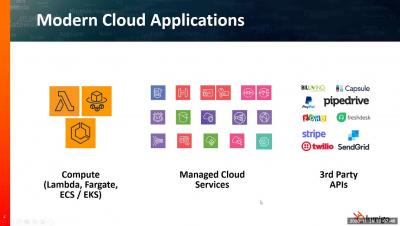
AWS Step Functions are an emerging solution in the field of serverless architectures, as they provide capabilities to coordinate between many services. This webinar takes the "Right to be forgotten" (GDPR) workflow as an example of a hands-on AWS Step Functions tutorial: use-cases, difficulties, and solutions. Combining Cloudway's experience with Lumigo's monitoring and debugging solution, we provide a full framework to manage multiple subsystems into a single serverless flow and get the work done.

Webinar: How to Monitor Serverless Applications

The software we write does not always work as smoothly as we'd like. To know if something went wrong, find the root cause, and fix the problem, we need to monitor our system and get alerts whenever issues pop up. There are many useful tools and practices for non-serverless applications. As we adopt serverless architecture can we continue to use the same approach? Unfortunately, the answer is no.

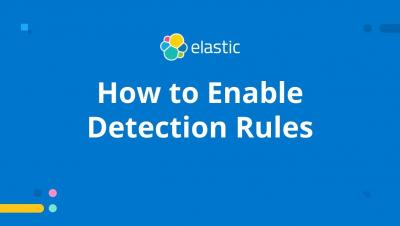
How to Enable Detection Rules via Elastic Security - Version 7.10

The detection engine brings automated threat detection to the Elastic Stack through the Security app in Kibana. As part of our belief in the power of open-source, Elastic Security has open sourced all our detection rules to work alongside the security community to stop threats at scale and arm every analyst. In this video, you’ll learn more about the detection engine and how to automate the protection of your data.

An Open Source Prometheus Tutorial for System and Docker Monitoring

Prometheus is an essential element in DevOps. It has one of the largest contributor communities in the open source world and is the favorite database for time-series metrics data. It is also part of Logz.io’s complete observability package, which integrates open source grafana, Jaeger, and ELK Stack into one platform. It’s a favorite for system and container monitoring. This tutorial will show you how Prometheus works with Docker and your local machine.