Filter Enhancement | Moogsoft Product Videos & How-Tos
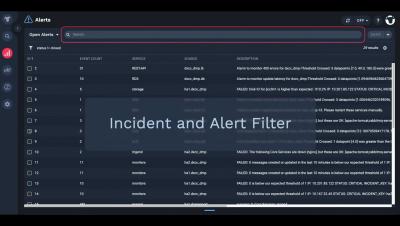
Do quick keyword searches and find exactly the incident or alert you're looking for.


Given the strategic importance of the cloud and size of cloud expenditures, it’s critical for enterprises to have solid controls in place to manage it all. According to our latest research, however, while most organizations agree with that sentiment, very few have put it into practice. There are distinct but related disciplines that come into play: FinOps and cloud governance. In this two-part series, we explore current state of each.
As systems become more complex and distributed, the total amount of machine data put off by those systems continues to skyrocket. While teams may need access to an ever-increasing scope of machine data to gain insights into their increasingly complicated systems, that same need to access an increasingly large amount of data also creates cost concerns. Those concerns can grow into cost emergencies quickly.
The IT Operations space has a ton of recent advancements, and arguably the most elusive Observability unicorn for many organizations has got to be "AIOps," perhaps with "proactive monitoring" coming in as a close second place. You may be thinking.
The fact that data centers have evolved a lot is undeniable. This has enabled storage evolution and the execution of online applications. Now we often talk about hybrid clouds. *Yes, we don’t even take the time to explain what digital clouds are anymore and we even assume that everyone has their own, small but they have them.But when it comes to doing things big, it’s unavoidable to mention the giant Google Cloud®!
Recently we introduced new feature where you can trigger agent runs and report collection from the Mission Portal UI. This required our daemon cf-execd to behave a bit differently when periodic agent runs occur. Previously the daemon would create a new thread in which to run cf-agent, capture output, wait for completion and move on. We changed the behavior so that the daemon forks itself and then fork/execs cf-agent as before, with the forked cf-execd processing agent run output.