Release Notes: Priority-Based Alerting, Support Hours, SMS Alert Sources, Gap Detection in Schedules
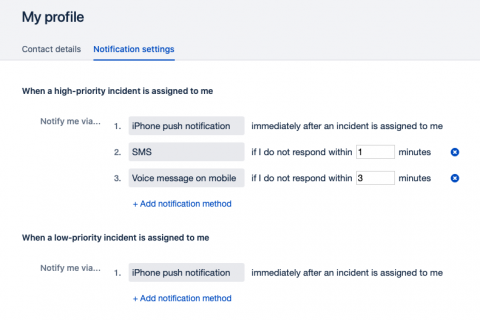
With Priority-Based Alerting, you can set different notification rules for high and low priority incidents.


With Priority-Based Alerting, you can set different notification rules for high and low priority incidents.
Everybody puts value on work. But not all work is the same or valued in the same way. What if we told you there’s a way to gain/protect up to $1 million in new revenue, reduce unplanned downtime by more than 60%, and improve team productivity by nearly 25%? This is where the differentiation of work comes in. Most of our day-to-day work is planned out; i.e., it’s work with structure.
Number of sessions, total sales, number of transactions, competitor pricing, clicks by search query, cart abandonment rate, total cart value…the analytics tools commonly used by eCommerce companies for performance monitoring can’t include every metric, and even if they did the analysts using them wouldn’t be able to keep up with the amounts of changing data.
AIOps helps DevOps teams in multiple ways, including by boosting developer productivity, improving the customer experience, and increasing the CI/CD cycle frequency.
With most businesses finding it hard to achieve a 99.9% uptime throughout the year, achieving a goal of 99.999% uptime looks daunting to developers. Here’s how to reach 99.99% uptime for your business. It’s like asking someone to build a bridge that would never collapse or a machine that would never break down no matter what. In short, it is a hard goal to achieve but yes it is achievable.
Here’s a quick checklist to publish articles or guest posts on Fyipe Blog. We invite anyone to publish stories to any of our publications. If you wish to contribute. Please send an email to [email protected] with your draft article. Please make sure your draft article follows guidelines in this post. Here’s what all this means for you as a writer: Educate your readers and teach them something new. Cut all the fluff. Get to the point — fast. Do not waste their time.
Customers can generate hosted status pages that display the status such as availability, response time and incidents of their services (websites, API, infrastructure) to their own clients or for internal use. All status pages are hosted and maintained by our care. Users point a custom domain to our DNS, and after seconds their page is ready. Hassle free.