Operations | Monitoring | ITSM | DevOps | Cloud

The latest News and Information on API Development, Management, Monitoring, and related technologies.

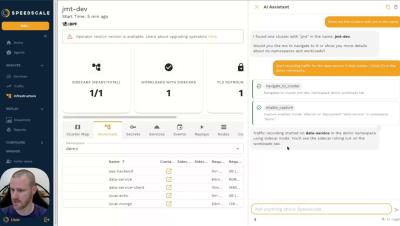
Speedscale Proxymock: Freely testing cloud native apps alongside AI code assistants

We’ll always remember 2025 as the year AI code assistants went big. Copilot, Cursor, Claude, Windsurf, whatever. Developers went from mistrusting these tools, to being expected to turn over much of their coding labor to them. Even if, according to an extensive Stack Overflow survey, only 3 percent of professional developers say they ‘highly trust’ AI coding tools.

MOCK AWS SES Locally! Stop Sending Test Emails & Cut Cloud Costs

In this quick guide, Speedscale's Matt LeRay shows you how to free your local development environment from direct AWS SES dependencies. When your application sends an email during local testing, it usually triggers a live AWS transaction, leading to slow tests, unnecessary cloud costs, and sometimes even spam filter issues.

Stop Getting Charged for Test Emails! #speedscale #aws #ses

Tired of local development using AWS SES leading to spam, cloud costs, and unnecessary API calls? When testing your app, you shouldn't have to connect to a live cloud environment just to send a test email. Learn how to set up your own local ProxyMock server to intercept and record real SES calls, so you can replay them instantly and accurately without ever leaving your desktop.

Synthetic Monitoring for GraphQL Endpoints: Beyond the Query

GraphQL isn’t just another API protocol—it’s a new layer of abstraction. It collapsed dozens of REST endpoints into one flexible interface where clients decide what data to fetch and how deep to go. That freedom is a gift for front-end teams and a headache for anyone tasked with reliability. Traditional monitoring doesn’t work here. A REST endpoint can be pinged for uptime.

Part 2: Building a Production-Grade Traffic Capture, Transform and Replay System

When developers try to build realistic mocks and automated tests from production network traffic, the real challenge isn’t just in the capturing—it’s in the data manipulation. Raw traffic is a chaotic sea of patterns, dynamic tokens, environment-specific secrets, and tangled dependencies that seem impossible to untangle by hand. Over my two decades of building these sytems, I learned that solving this problem requires more than brute-force parsing or ad hoc scripts.

The Load Testing Start Guide! #speedscale #stresstest #loadtesting #mocking #startup

Are you ready to get serious about load and stress testing, but don't know where to start? This guide highlights the trap most serious engineers fall into: trying to build a custom DIY testing environment. The traditional path means signing your team up for maintaining load drivers, test case frameworks, ephemeral environments, and endless custom mocks a massive drain on time and resources. There's a better, cheaper, and faster solution: Traffic Replay.

Playwright Check Suites Are Now GA - But What Does That Mean For You?

There are only a few companies that successfully invest in actively monitoring real user flows in production. I’ve been puzzled by the state of the art for many years, because I’m an anxious developer that always needs to know that production is “all right”. How can it be okay for all of us to wait for error logs, thrown exceptions or customer complains to learn about production issues?

Settle Your QA Debt Before the Bugs Start Breaking Kneecaps

In Part One, we discussed how QA debt builds silently over time — causing slower releases, late-night firefights, and unpredictable test cycles. The next step is understanding how much debt you have and where it hides. This post goes deeper into measuring QA debt — what to track, how to collect data, and how to use those insights to create a sustainable plan for improvement.

Now in the API: History, Custom Monitors, and Subscribers

Last month, we introduced the StatusGator API v3, a complete overhaul of our API designed to give developers more flexibility, an improved data model, and deeper integration options for monitoring the status of hundreds of services. Today, we’re excited to share three major additions to v3: the Board History API, Custom Monitors API, and Status Page Subscribers API.